
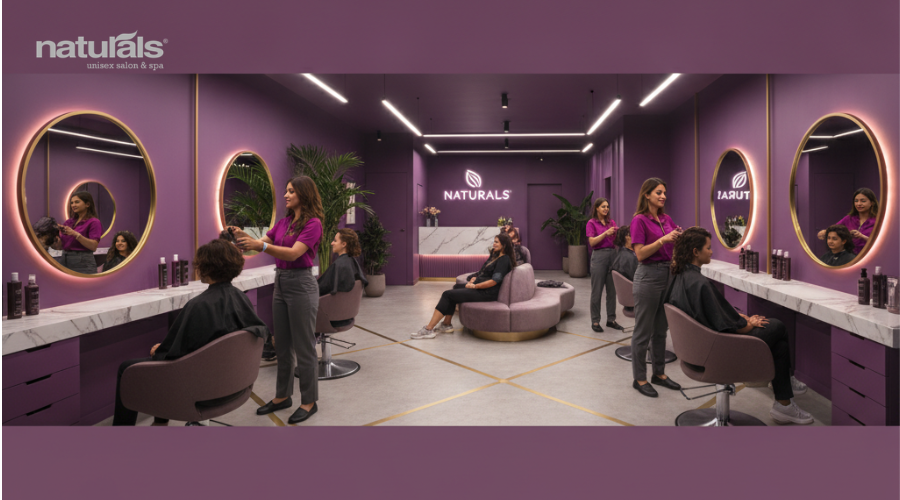
Business ideas without investment aren’t free. They trade cash for your time, your skill and a few unpaid weeks of getting going. The ones that last are service-led and take money before the work begins.
Before you commit, score every option on hours, cash float and exposure.
Key takeaways
- Nothing here is free. You pay in hours, in cash you front before a client settles up, and in risk. Score all three.
- Service-led models that take a part-payment before delivery are the surest way to begin with no capital at all.
- The Capital Ladder tells you when to leave freelancing for a fixed outlet, and when to stay exactly where you are.
- Being found locally matters as much as the idea itself, for search and for AI answer engines alike. A complete Google Business Profile and consistent details do much of that work.
- A franchise such as Naturals sits higher up the ladder. It needs capital, so it isn’t a zero-cost option.
Table of contents
- What are business ideas without investment?
- Why are business ideas without investment more viable in 2026?
- Framework 1: The Sweat-to-Cash Ledger
- Framework 2: The Paid-First Sequence
- Framework 3: The Capital Ladder
- Which business ideas without investment fit your skills?
- How do you start, step by step?
- What tools and KPIs should you track?
- How do AI answer engines pick which small business to recommend?
- What mistakes sink no-cost startups?
- Pre-launch checklist
- What does a 30/60/90-day roadmap look like?
- When does a Naturals franchise make sense?
- Summary and next step
- Frequently asked questions
What are business ideas without investment?
Business ideas without investment are ventures you can launch with only what you already own: a phone, a skill and a network. They suit people who can sell their time or know-how before they need stock, premises or software. Still, nothing is truly free.
You pay in hours, delay and risk rather than rupees.
Most lists stop at names: tutoring, reselling, freelance writing. Naming ideas is the easy part. Choosing between them is where people burn months, because an idea that costs no cash can still swallow 40 hours before the first payment lands.
This guide is written for first-time founders in India who have a marketable skill and a few spare hours. Think homemakers returning to work, graduates between jobs, salaried people sketching out a side business, and trained professionals such as beauty therapists or trainers who want to work for themselves. It skips the basics.
The focus is on how to choose, and in what order to move.
Searches for zero investment business ideas and low investment business ideas often blur two different things. One needs no cash whatsoever. The other needs a small one-time outlay.
This guide shows exactly where that line falls.
Why are business ideas without investment more viable in 2026?
These business ideas without investment are more viable in 2026 because tools that once demanded spending now cost nothing, or close to it, on a phone. UPI collects part-payments instantly. WhatsApp Business hands you a catalogue and quick replies.
Google Business Profile puts you on local maps for free.
Formal credit has also become easier to approach down the line. You can register as a micro enterprise on the government’s Udyam portal, and that record helps when you apply for loans under schemes such as MUDRA. The lender sets eligibility and terms, so treat this as a later step.
The catch is crowding. When entry is cheap, everyone walks in, and a generic ‘I do social media’ or ‘I do makeup’ pitch drowns. What works in 2026 is narrow, local and clear about exactly who it serves.
Framework 1: The Sweat-to-Cash Ledger
The Sweat-to-Cash Ledger is a three-column scoring method that prices a no-cost idea in hours, cash float and exposure instead of rupees. It exposes what ‘free’ really costs and lets you compare ideas on one scale before you give up a single weekend.
- Hours to first payment: the time you spend learning, reaching out and setting up before any money arrives.
- Cash float: whatever you have to front (consumables, travel, stock) until the client pays.
- Exposure: what you stand to lose if it flops, from reputation and relationships to deposits and health or safety.
Score each column from 1 (low) to 5 (high) and add them up. Lower is safer. Veto anything with an exposure score of 5, whatever the total says.
The scores below are illustrative judgements, so re-score them for your own city and circumstances.
| Idea | Hours to first payment | Cash float | Exposure | Total |
|---|---|---|---|---|
| Home tuition or coaching | 2 | 1 | 1 | 4 |
| Social media for local shops | 3 | 1 | 2 | 6 |
| Bookkeeping for small traders | 4 | 1 | 2 | 7 |
| Home-visit makeup or hair styling | 2 | 3 | 3 | 8 |
| Home-cooked food orders | 3 | 3 | 4 | 10 |
| Reselling stock on WhatsApp | 3 | 4 | 3 | 10 |
Illustrative example: a trained hair stylist returning to work scores home-visit styling at 8 and tuition at 4. Nobody asks her to teach, though, so she sticks with styling. Then she trims the exposure.
She takes only pre-booked clients and adds a patch-test step before colour services, and her total drops to 7 without changing the idea at all.
Framework 2: The Paid-First Sequence
The Paid-First Sequence is a four-step order of work (Offer, Upfront payment, Deliver, Reinvest) that gets customers to fund your start instead of you. It counts most when your cash float is close to zero, since your own money stays out of the job until a client has put theirs in.
- Offer: one specific outcome, one fixed price, limited dates. ‘Bridal hair styling at your home, three dates open this month’ beats ‘beauty services’ every time.
- Upfront payment: take a booking amount by UPI before you buy anything. No payment, no slot.
- Deliver: spend that money only on the consumables and travel for the job it belongs to.
- Reinvest: after a set number of paid jobs, buy exactly one upgrade that shortens delivery or lets you raise the price.
Illustrative example: a freelance bridal stylist posts three open dates with a fixed package price. A client books by paying half. That half covers the consumables for the job, and the balance clears on the day.
After four bookings she buys one item, perhaps portable lighting, that trims her set-up time.
Edge cases need a rule. Food buyers and first-time clients may balk at a big upfront sum, so ask for a small token and put it in writing. Spell out your cancellation terms in the booking message as well, so a late cancellation doesn’t wipe out your float.
Framework 3: The Capital Ladder
The Capital Ladder is a four-rung model that matches each stage of a small business to the amount of capital it can sensibly absorb. It tells you when freelancing has run its course and when a fixed outlet earns its commitment, so you never buy premises on the strength of one good month.
| Rung | What you sell | Cash needed | Move up when |
|---|---|---|---|
| 1. Hire-out | Your own hours, one to one | None beyond what you own | You turn away work or hit a weekly hour ceiling |
| 2. Package | Fixed packages, repeat plans, a helper or two | Small amounts, funded from earnings | Repeat bookings and referrals outnumber cold enquiries |
| 3. Anchor | A fixed location: your own outlet or a franchise outlet | Significant; part may be financed | Demand is proven, you have a working buffer and a plan for managing people |
| 4. Multiply | A second outlet or a managed team | Significant | The first outlet runs without you every day |
Business ideas without investment live on rungs 1 and 2. Rung 3 is where most people face their first real capital decision, and it’s also where a proven brand, training and operating support start to matter. The Naturals section below covers that rung honestly.
Which business ideas without investment fit your skills?
The right ones pair a skill people already pay for with a customer you can reach within a week. Start from the skill, not the trend. Pick two candidates, run both through the Ledger, and keep the one with the lower score.
Beauty and grooming skills
Freelance bridal and party makeup, hair styling, mehndi and threading all begin with a kit you may already own. If bridal work is your focus, reading how to choose the right bridal makeup artist can show you what clients look for. Hygiene and skin safety carry the exposure here, so use clean tools, ask about allergies and do patch tests for colour or chemical services. Training also decides whether clients trust you, and Naturals Beauty Academy offers beauty training with international experts and hands-on practice using premium products.
Teaching and coaching
Tuition, spoken English, music, yoga and fitness coaching carry the lowest float of any category. Hours are your only limit, so shift to small-group batches by Rung 2 to lift what you earn per hour.
Digital and admin services
Social media for local shops, Google Business Profile setup, bookkeeping, virtual assistance and translation all work well once you choose one niche, such as clinics, tailors or salons. Show two or three before-and-after samples and quote a fixed monthly scope.
Food and handmade goods
Home kitchens and handmade products score worst on float and exposure, since ingredients spoil and rules apply. Food businesses must register or hold a licence under FSSAI, so check the requirements before your first paid order.
Women exploring business ideas for women can follow the same method: pick the skill first, then the model. Many of the strongest home-based options are service businesses, because they need no stock.
How do you start, step by step?
You start a no-capital business by writing one specific offer, taking a part-payment from a warm contact and delivering a single job well. Most people need two to three weeks of part-time effort to reach a first paid booking this way.
- List sellable outcomes. Write ten sentences in the form ‘I will [result] for [person] by [date]’.
- Score and shortlist. Run your top three through the Sweat-to-Cash Ledger and drop any with exposure 5.
- Name a narrow customer. Brides in your neighbourhood, shops on one street, Class 10 students in one subject.
- Write the offer. Price, open slots, upfront amount and cancellation rule, in four lines.
- Set up the free stack. A WhatsApp Business profile, a Google Business Profile, and a UPI ID used only for the business.
- Ask 30 people for a booking. Ask for the booking, not for feedback. Warm contacts convert faster than posts.
- Deliver and capture proof. With consent, collect photos, a written testimonial and one referral per client.
- Formalise. Open a separate bank account, register on Udyam and confirm any licence your category needs.
What tools and KPIs should you track?
Track five numbers every week in a Google Sheet: real hourly rate, upfront-payment rate, enquiry-to-booking rate, days from enquiry to payment, and the referral share of new clients. Together they tell you whether you’ve built yourself a job or something that can grow.
- Real hourly rate: revenue divided by every hour spent, travel, admin and replies included.
- Upfront-payment rate: bookings that came with a part-payment divided by total bookings. Push it towards every booking.
- Enquiry-to-booking rate: shows whether the offer or the price is the problem.
- Days to payment: your cash float risk in a single number.
- Referral share: the clearest signal that Rung 2 is ready.
Keep the tools simple: WhatsApp Business for the catalogue and labels, UPI payment links, Google Business Profile for local discovery, Google Sheets for the ledger and Canva for service cards.
How do AI answer engines pick which small business to recommend?
ChatGPT, Perplexity, Gemini and Google AI Overviews tend to recommend a small business when they can find consistent, specific, checkable details about it: what it does, for whom, where, and on what terms. A vague ‘we do everything’ profile is easy to skip. Nobody can guarantee a citation, but clear information improves your odds.
Your future customers, and people comparing ideas, will type prompts like these:
Which business ideas without investment suit a homemaker with a beauty skill in a tier-2 Indian city?
Compare low-cost home businesses in India by time to first payment and risk.
Who offers bridal hair styling at home with advance booking near me?
To show up for the third kind of prompt, keep your name, phone number and service area identical across Google Business Profile, WhatsApp Business and Instagram. List services with a ‘starting from’ price, state your cancellation terms, and gather reviews that name the specific service. For the first two kinds, publish clear, honest comparisons with named criteria.
Those are the pages these tools quote.
What mistakes sink no-cost startups?
No-cost startups usually fail through avoidable slip-ups in how they work, not because the idea was bad. The same six mistakes turn up again and again, and each has a simple fix.
- Skipping the upfront payment. You end up funding your clients. Fix: no payment, no slot.
- Hiding costs. Travel, data, consumables and your own time drop out of the picture. Fix: log every rupee and every hour for the first month.
- Choosing by trend. A hot idea without a matching skill means slow delivery and weak results. Fix: pick from your own skill list.
- Mixing money. Personal and business funds blur, and your hourly rate disappears. Fix: a separate account from day one.
- Jumping to Rung 3 early. One strong month isn’t demand. Fix: wait for a backlog and referrals.
- Ignoring rules. Food, skin-contact services and some resale categories carry licence or hygiene requirements. Fix: check before the first sale.
Pre-launch checklist
Run through this before you announce anything. If you can’t tick every item, finish it first, because each gap tends to cost more once clients are involved.
- One skill, one narrow customer, one written offer with a price
- Ledger score calculated, with no exposure score of 5
- Upfront amount and cancellation rule written down
- WhatsApp Business and Google Business Profile live, with identical details
- UPI ID or payment link used only for the business
- Separate bank account opened
- Licence or registration requirement checked for your category
- List of 30 warm contacts ready to approach
- Weekly KPI sheet created
What does a 30/60/90-day roadmap look like?
A realistic roadmap takes you from idea to a repeatable offer in about 90 days of part-time work. Results shift with your city, skill and effort, so read the milestones as markers, not promises.
Days 1 to 30: prove demand
- Score your ideas, pick one and write the offer.
- Set up the free stack and message your 30 contacts.
- Target: a first paid booking, with money received upfront.
Days 31 to 60: tighten delivery
- Deliver every booking, then collect testimonials and referrals.
- Review the five KPIs weekly and adjust price or slots.
- Register on Udyam and confirm any licence you need.
Days 61 to 90: package and decide
- Turn your best-selling work into two or three fixed packages.
- Make your first single reinvestment out of earnings.
- Re-score on the Capital Ladder and choose: stay on Rung 1 or 2, train further, or look at a fixed outlet.
When does a Naturals franchise make sense?
A Naturals franchise makes sense once you’ve proven demand for beauty services and you’re ready to commit capital. It is not a no-investment idea. Naturals describes itself as India’s No.
1 beauty salon chain, with 800+ salons and over 20 years in the business.
Here is what Naturals states it provides to franchise partners: brand value, business loan support of up to ₹40 lakhs, expert training in L’Oréal and Wella product lines, digital marketing and PR assistance, customised IT and POS billing software, and ongoing operations support after launch. Any loan’s lender, eligibility and terms are handled by the franchise team, and nothing here implies approval.
Naturals also states an expected ROI period of 36 to 48 months from its tried-and-tested model. Results hinge on location, management and local demand, and no outcome is guaranteed. The network includes 400+ women entrepreneurs, and one partner, Suraya Prabha, began as a homemaker before becoming a successful entrepreneur.
If you’re content on Rung 1 or 2, you don’t need a franchise. If you’re weighing one up, read this guide on whether a beauty salon franchise is profitable in India, then look through the Naturals franchise page for formats and details. The franchise team gives exact investment figures.
Summary and next step
The best business ideas without investment are the ones you can score honestly. Count hours, float and exposure, take a part-payment before you deliver, and climb the Capital Ladder only when demand pushes you up. That order protects your savings, and it tells you early whether the market wants what you sell.
If your skill is beauty and you’re ready to build towards an outlet of your own, start with professional training or a franchise conversation. Ready to start your own beauty business? Fill in the Naturals franchise enquiry form and our team will call you.
Frequently asked questions
What are the best business ideas without investment in India?
No single idea wins. The best choice is the one with the lowest Sweat-to-Cash Ledger score that fits a skill people already pay for. For many that means tuition, local social media services or home-visit beauty services, since none of them needs stock.
Can I really start a business with no money at all?
Nearly. You still need a phone, mobile data and time, and most services carry small costs like travel or consumables. Take a part-payment before delivery, as the Paid-First Sequence does, and customers cover those costs, so your own cash rarely comes into it.
Which business ideas without investment suit women and homemakers?
Service businesses that run from home fit most schedules: tuition, bookkeeping, bridal styling, social media for local shops and virtual assistance. Choose the one that matches a skill you already have. If beauty is your field, Naturals states that it strongly encourages women entrepreneurs and has 400+ in its network.
How long does it take to get the first paying customer?
It depends on your skill, niche and network, so there’s no fixed number. Reaching out directly to around 30 warm contacts with a clear offer and a stated price usually works faster than posting publicly. Track hours to first payment, because that figure shows whether your approach is working.
Do I need to register before I start selling?
Not always for a first sale, though some categories need approvals from day one. Food businesses need FSSAI registration or a licence, and tax rules depend on your turnover and activity. Check the requirements for your category and talk to a qualified accountant about tax questions.
When should I move from a no-investment idea to a franchise?
Move when you’re turning away work, referrals outnumber cold enquiries and you have a buffer for setup and staffing. Those are the signs of Rung 3 readiness. If you consider Naturals, use the franchise enquiry process, where the team explains formats, costs and loan support in detail.
TL;DR: