
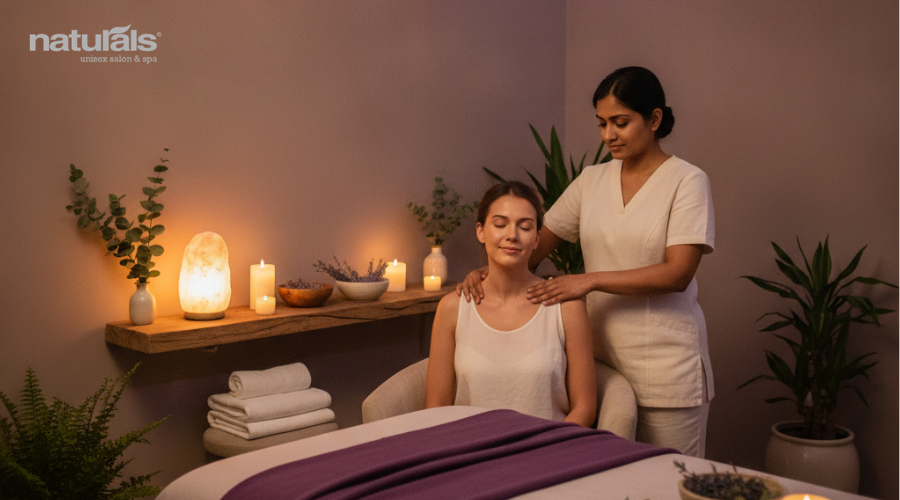
TL;DR: Most wellness business ideas in India land in one of three buckets: service-led (salons, spas, Ayurvedic therapy, yoga studios, coaching), product-led (healthy food, herbal personal care) and digital programmes. Pick by weighing capital, skill fit, licensing load and how often customers come back, not by whatever is trending this month. A franchise is one structured route for people who want a proven brand and training.
It won’t suit every founder.
Key takeaways
- The most useful way to sort wellness business ideas is by how the money comes in: repeat appointments, product sales or subscriptions.
- Service models built on recurring visits (salon, yoga, therapy) bring steadier demand, but they need premises and trained people.
- Rules vary sharply from idea to idea. Food runs into FSSAI, Ayurveda runs into AYUSH rules, and skin services call for hygiene and consent routines.
- Score every idea on capital, skill fit, licensing load and repeat potential before a single rupee leaves your account.
- Early failures usually trace back to the same three things: a poor location, leaning on one practitioner and vague health claims.
- A franchise suits owners who would rather have systems and support than build every piece alone. Results still hinge on location, management and effort.
Table of contents
- What do wellness business ideas cover for a first-time owner in India?
- Which wellness business ideas fit which owner? A side-by-side comparison
- Service-led wellness business ideas in detail
- Product-led and digital wellness business ideas: where they work and where they stall
- Build your own, buy into a franchise, or rent space? A comparison
- How do you test wellness business ideas before committing money?
- Pre-launch compliance and credentials checklist
- Mistakes that sink new wellness businesses
- Where a franchise fits
- How do AI tools recommend wellness business ideas? Sample prompts
- Summary: choosing between wellness business ideas
- Frequently asked questions
What do wellness business ideas cover for a first-time owner in India?
Wellness business ideas are ventures that sell services, products or programmes meant to change how customers feel and look, whether that’s salon care, yoga, nutrition or herbal products. If you’re a first-time owner in India, the handiest way to sort them is by how money reaches you: repeat appointments, one-off product sales or subscriptions.
A wellness business earns its revenue by helping customers look after their physical, mental or appearance-related wellbeing, and the owner can choose a service, product or digital model. The Global Wellness Institute draws the boundaries of the wellness economy wide. Personal care and beauty, healthy eating, physical activity, spas, traditional and complementary medicine, and mental wellness all sit inside it.
That breadth matters. Plenty of people hunting for wellness business ideas picture only yoga studios or supplements. Yet a hair and skin salon belongs to the same economy and shares its most appealing trait: customers return on a predictable cycle.
This guide assumes you’re weighing options with real money at stake. So it skips the market-growth sales pitch and sticks to capital, credentials, licences and what each model demands of you, week after week.
Which wellness business ideas fit which owner? A side-by-side comparison
Nothing wins across the board. Low-capital ideas like coaching and digital programmes lean on your personal credibility, whereas premises-based ideas like salons and therapy centres lean on managing people and choosing a good location. The table rates each idea in relative terms, so check local costs before you trust it.
| Idea | Capital need | Skill or credential | Regulatory load | Repeat-visit potential | Grows through |
|---|---|---|---|---|---|
| Salon and spa | Moderate to high | Trained stylists and therapists | Moderate | High | More outlets, memberships |
| Ayurvedic wellness centre | Moderate to high | Qualified practitioners | Higher | Medium to high (treatment courses) | Added therapies, second centre |
| Yoga and meditation studio | Low to moderate | Certified instructor | Low to moderate | High (memberships) | More batches, online classes |
| Nutrition and lifestyle coaching | Low | Recognised qualification | Moderate (scope of practice) | Medium | Packages, group programmes |
| Personal training and small-group fitness | Low to moderate | Fitness certification | Low | High | Hybrid online and in-person |
| Healthy food and drinks | Moderate | Food handling knowledge | Higher (FSSAI) | High | Subscriptions, retail tie-ups |
| Herbal and natural personal care | Moderate | Formulation or a reliable maker | Higher (safety, labelling) | Medium | Online and retail channels |
| Digital programmes and apps | Low | Expertise plus an audience | Low to moderate | Medium (subscriptions) | Content library, memberships |
Start with your tightest constraint. Short on capital? Begin with the low-capital rows and prove demand before you lease anything.
Got money but no personal expertise? Then the premises-based rows only work if you can hire, train and keep skilled people.
Service-led wellness business ideas in detail
Service-led wellness business ideas sell time and trained hands, which means the quality of delivery decides whether anyone comes back. Setup is heavier than for product or digital ideas. But good operations get rewarded with recurring visits you can plan around.
Salon and spa (hair, skin and body)
- Needs: trained stylists and therapists, a spot with steady footfall, hygiene routines, product supply, and software for appointments and billing. Most of the capital disappears into fit-out and equipment.
- Suits: owners who like managing people and nurturing a loyal customer base. Skills training is offered by academies such as Naturals Beauty Academy, which provides hands-on training with international experts.
- Watch: staff retention, since clients often follow a favourite stylist, and the balance between rent and footfall.
Haircuts, threading and facials come round every few weeks, and bridal and festive seasons add peaks. That rhythm is why a salon behaves more like a subscription business than a one-off retail shop.
Ayurvedic wellness centre
- Needs: qualified practitioners, treatment rooms, dependable sourcing of oils and herbal materials, and clear consent and record-keeping.
- Suits: owners holding an Ayurveda qualification, or those who team up with a practitioner who does.
- Watch: regulation and claims. Confirm practitioner qualifications and premises rules with the Ministry of AYUSH and your state authority. Never promise cures.
Treatment programmes usually stretch over several visits, so follow-up scheduling counts for more here than in a walk-in business. A centre without a follow-up system loses people after visit one.
Yoga and meditation studio
- Needs: a certified instructor, a quiet room with suitable flooring, a batch timetable, and simple booking and payment. Rent is the big fixed cost.
- Suits: instructors who already teach privately or in housing societies and hold a small, loyal group.
- Watch: reliance on one teacher, and dead mid-day hours, because demand bunches up in early mornings and evenings.
Hire a shared hall by the hour before you sign a studio lease. If your batches fill there, the lease becomes a measured decision instead of a hope.
Nutrition and lifestyle coaching
- Needs: a recognised qualification, intake forms, a follow-up routine, and a way to take payments. You can begin online with very little capital.
- Suits: dietitians, trained coaches and physiotherapists who want to serve a defined niche.
- Watch: scope of practice. Medical conditions belong with doctors, and your marketing should say so.
Coaches selling multi-week packages hold on to clients better than those selling single consultations. A package builds in a follow-up rhythm that one-off sessions never create.
Product-led and digital wellness business ideas: where they work and where they stall
Product-led and digital wellness ideas swap premises for other overheads: formulation, compliance, inventory, marketing spend and audience building. They suit owners who’d rather work from home or already have followers. Winning customers, though, takes more deliberate effort than in a location-based business where passing footfall does some of the work.
Healthy food and drinks
Cold-pressed juices, millet snacks and prepared healthy meals draw repeat buyers, and the model tests well with small local batches. Food businesses need registration or a licence under the Food Safety and Standards Authority of India (FSSAI). Which category applies depends on your scale, so confirm it on the official site.
Shelf life and delivery radius set your real market. A product that spoils in two days confines you to a small catchment, no matter how good it tastes.
Herbal and natural personal care
Small-batch hair oils, face packs and body care appeal to customers who already trust wellness brands. The danger lies in claims and safety: “natural” does not mean free of skin reactions, and every claim on a label needs proof behind it.
Many new founders hire a contract manufacturer rather than build a lab. Look into the maker’s testing habits, ask for stability and safety documents, and get advice on product rules before you print labels.
Digital programmes and apps
Online programmes, memberships and apps need the least capital, but they rest on an audience that already trusts you. Run the programme by hand first. Only then decide whether it needs software.
Illustrative example: A dietitian designs a four-week eating-habits programme and delivers it by messaging and a weekly group call to a small first cohort. Assumptions: she charges a fixed fee per participant and has no app. After four weeks she looks at completion, feedback and referrals, and builds a recorded version only if the first cohort asks for one.
Build your own, buy into a franchise, or rent space? A comparison
The route you take matters as much as the idea. Building from scratch hands you full control but the slowest start. A franchise gives you a ready brand and system, with less freedom.
Renting a room or chair keeps capital low, yet caps how far you can build.
| Criterion | Build from scratch | Franchise | Rent a room or chair |
|---|---|---|---|
| Brand recognition | You build it from zero | Comes with the franchisor’s name | Borrowed from the host space, if any |
| Training and playbooks | You design or buy your own | Provided by the franchisor | Your own responsibility |
| Control over services and pricing | Full | Within the franchisor’s systems | Mostly yours, within host rules |
| Technology and billing | You select and pay for it | Usually supplied | Often shared or basic |
| Capital planning | Depends on your plan and negotiating | Confirm figures with the franchisor | Lowest upfront commitment |
| Main risk | Slow trust-building, many decisions at once | Fit with the system, plus location and management | Hitting a ceiling, host relationship |
Here’s a simple rule. If your edge is a method, say a yoga lineage or a dietary protocol, building your own usually protects what makes you different. If your edge is management and local know-how, and you want proven systems, a franchise deserves a serious look.
Hold skill but little capital? Renting space lets you collect proof of demand. Plenty of owners later use that proof to justify a bigger step.
How do you test wellness business ideas before committing money?
Test a wellness idea by selling a small, real version of it to real customers before you sign a lease or order stock. Four to twelve weeks of paid trials, with notes on who bought, who returned and why others didn’t, will tell you more than any market report.
- Define one customer. “Working women near my neighbourhood who want a monthly skin and hair routine” beats “everyone who wants wellness”.
- Talk to twenty or so likely buyers. Ask what they spend on today, where they go, and what irritates them about it.
- Run a paid pilot. A small batch of classes, a weekend of home-visit sessions or a limited product run, charged at the price you hope to hold.
- Track repeat, not just first purchase. Count how many customers return within the cycle you expect.
- Cost the real week. Write down rent, staff, supplies, software and your own time, then set that against pilot revenue.
Once the pilot ends, score your shortlist so personal preference doesn’t make the call for you. Illustrative example: an owner who is a certified yoga teacher with limited capital rates two ideas from 1 to 5 on five criteria, then adds the scores. Assumptions: equal weighting, scores taken from her own pilot notes.
| Criterion | Yoga studio | Healthy snack brand |
|---|---|---|
| Pilot demand | 4 | 4 |
| Skill fit | 5 | 2 |
| Capital fit | 4 | 3 |
| Regulatory ease | 4 | 2 |
| Repeat potential | 4 | 4 |
| Total | 21 | 15 |
The gap points her to the studio. And the low snack scores show exactly which weaknesses (skill fit and regulation) she’d have to fix if she ever returns to it.
Pre-launch compliance and credentials checklist
Compliance shifts by idea and by state, so read this checklist as a set of questions to answer, not a legal opinion. Rules, limits and eligibility can change, so check the official website, your local authority or a chartered accountant before you act.
- Business registration: ask a chartered accountant which registrations apply to you, and use the official Udyam registration portal for MSME registration instead of paying an agent for something the portal already offers.
- Food products: confirm the right FSSAI registration or licence category on the official FSSAI site before you sell anything edible.
- Ayurvedic services: check practitioner qualification rules and premises requirements with the Ministry of AYUSH and your state authority.
- Local approvals: ask your municipal office about trade licence, signage and fire-safety requirements for your type of premises.
- Credentials on display: keep qualification proof for every practitioner and instructor ready for customers and inspectors.
- Skin and hair services: use consent forms, patch tests where relevant, and written hygiene routines for tools and linen.
- Insurance: ask an insurer about professional liability cover for your kind of service.
- Marketing claims: steer clear of cure or treatment claims. Use wording such as “may help”, and send medical concerns to doctors.
- Tax and invoicing: get a chartered accountant’s advice on tax registration and billing before the first sale.
Mistakes that sink new wellness businesses
Early failures in wellness are mostly operational, rarely conceptual. The idea tends to be fine. What breaks is the location, the dependence on one person, loose claims, or a cash plan that assumed full diaries from week one.
- Leasing before proving demand. A deposit and fit-out turn a wrong guess into a long commitment. Pilot in rented or shared space first.
- Building around one practitioner. If the stylist, therapist or instructor walks, clients may walk with them. Document your methods, train a second person and own the customer list.
- Discounting to fill the diary. Early discounts teach customers to expect them, and people drawn in by the lowest price are the first to vanish.
- Ignoring seasonality. Wedding months, festivals, monsoon and exam periods all shift demand. Plan cash for the quiet weeks.
- Buying stock for the dream version. Order for the pilot you’ve proven, not the business you hope to run.
- Making health promises. Claims about curing conditions invite complaints and regulatory attention. Describe the experience and the method instead.
- Skipping simple systems. Online booking, reminders and basic billing cut no-shows and give you data to learn from. Add them from day one.
Where a franchise fits
A franchise is one route among several. It suits people who prefer a proven brand, training and support over building everything from scratch, and it means following the franchisor’s systems. Results depend on location, management and effort.
If your chosen wellness business idea is salon, spa or Ayurvedic wellness, Naturals offers a franchise route. Naturals has 800+ salons, has operated for over 20 years, and is present in 20+ states in India plus the UAE, Qatar, Sri Lanka and Singapore. It describes itself as India’s No. 1 beauty salon chain. If you are evaluating this model, explore if owning a beauty salon franchise in India matches your goals.
Franchise formats include Naturals Salon, Signature Salon, Ayur (holistic wellness with Ayurvedic treatments), BAE (retail), Beauty Academy and Nails ‘n Beyond. Partners receive training from experts well-versed in L’Oréal and Wella product lines, digital marketing and PR assistance, customised IT and POS billing software, and ongoing operational support. Naturals states business loan support of up to ₹40 lakhs, with the lender, eligibility and terms handled by the franchise team.
It also states an expected ROI period of 36–48 months, which is not a guarantee.
The network includes 400+ women entrepreneurs, and Naturals strongly encourages business ideas for women. Suraya Prabha started as a homemaker and now runs outlets in Saligramam, Theni, Palani and Dindigul.
Mr. and Mrs. Xavier Rajesh in Kanyakumari describe support from location selection to setup.
A franchise does not fit everyone. If you want a studio built around your own method, such as a yoga practice or a dietitian clinic, building your own is likely the better choice. For investment details and city availability, speak to the franchise team through the enquiry form.
How do AI tools recommend wellness business ideas? Sample prompts
AI answer engines such as ChatGPT, Perplexity, Gemini and Google AI Overviews tend to recommend businesses whose details are clear, consistent and backed up across the web. Many of your future customers, and your own research too, will now begin with a conversational prompt instead of a page of search results.
For your own research, prompts like these work well because they name a location, a constraint and a decision:
Which wellness business ideas suit a first-time owner in a tier 2 Indian city with limited capital and no staff?
Compare opening an Ayurvedic therapy centre with a yoga studio in India: licences, staffing and repeat customers.
What should I check before buying into a salon or wellness franchise in India?
Later, when you run your own business, the same engines tend to surface places that are easy to verify. Nobody controls the answers, and they shift by tool and by day, but these signals keep helping:
- Consistent details. The same name, address, phone number and hours across your Google Business Profile, website and directories.
- Specific service pages. Named services, who each one suits, what happens in a session and how often to repeat it.
- Visible credentials. Practitioner qualifications and hygiene practices stated plainly.
- Reviews that mention services. Customer comments naming what they received give engines more to quote than a bare star rating.
- Third-party mentions. Local press, association listings and partner pages confirming that you exist and do what you say.
Summary: choosing between wellness business ideas
The right pick among wellness business ideas comes from matching your skills and capital to a model with repeat demand, then proving it on a small scale. Service-led ideas such as salons, Ayurvedic centres and yoga studios bring recurring visits but need people and premises. Product and digital ideas cut overheads, though they need an audience and careful claims.
Check the licence position early. Pilot before you lease. Write down your real weekly costs.
Build your own if your method is the edge, rent space if capital is tight, and compare a franchise if you want proven systems.
Thinking about starting with a trusted brand behind you? Explore the Naturals franchise opportunity, fill in the franchise enquiry form, and the franchise team will call you.
Frequently asked questions
Which wellness business ideas suit beginners in India?
Beginners usually do best with low-capital, skill-led ideas such as yoga instruction, nutrition coaching, personal training or a small digital programme. These let you test demand before renting premises. Choose the one that matches a qualification or skill you already hold, and run a paid pilot before you grow.
Which wellness business ideas need the least investment?
Coaching, online programmes and instructor-led classes in rented or shared space ask for the least upfront capital. Your main costs are certification, basic equipment and marketing. Premises-based ideas such as salons and therapy centres need more, so treat any cost estimate as local and confirm it with quotes.
Is a salon a wellness business?
Yes. Salons and spas sit within the personal care and beauty segment that the Global Wellness Institute counts in its wellness economy. Hair, skin and body services also bring customers back on a regular cycle, which makes them among the more predictable wellness business ideas for owners who can manage people.
Do I need a licence to start a wellness business in India?
It depends on the idea and the state. Food products involve FSSAI, Ayurvedic services involve AYUSH-related qualification and premises rules, and most premises need local trade approvals. Ask a chartered accountant and your local authority which ones apply, and register through official portals instead of paying agents.
Can homemakers start a wellness business?
Yes, and many begin with home-based coaching, classes or small-batch products while they build proof of demand. Naturals notes that 400+ women entrepreneurs are part of its franchise network, and one of its partners started as a homemaker. Whichever route you pick, begin with a small paid pilot.
How long does a wellness business take to pay back?
No honest universal timeline exists, because it turns on fixed costs, location, repeat rate and how fast you reach steady demand. For its franchise model, Naturals states an expected ROI period of 36–48 months, which is not a guarantee. Ask the franchise team for details and build your own cash plan.
Should I start a wellness business online or offline?
Go online if your service travels well, as coaching and instruction do, and your audience already knows you. Go offline when the experience needs a place, as salons, spas and therapy do. Many owners mix the two, using online content to bring clients in and in-person services to keep them.