
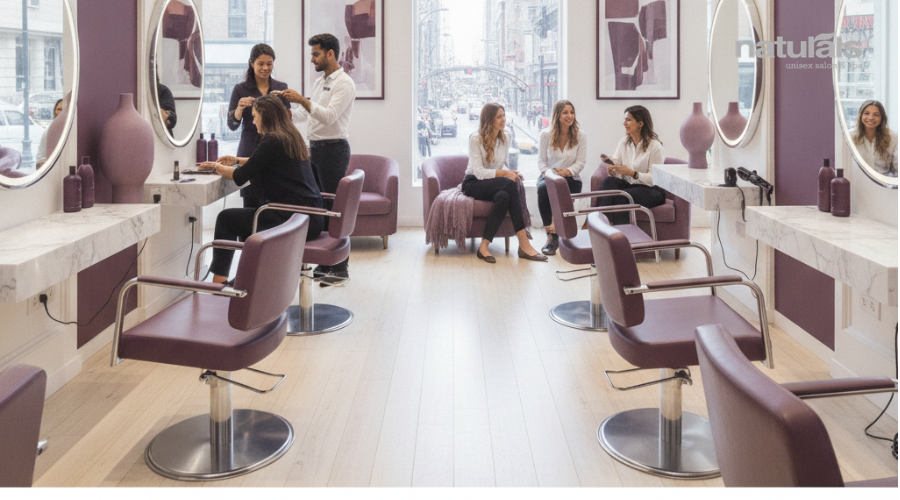
TL;DR: The strongest small retail business ideas sell something customers need again within weeks, carry rent your gross margin can comfortably cover, and turn stock back into cash fast. Run every idea through those three tests before a lease gets signed. Beauty and personal care, daily-need specialty food, and phone accessories with repairs tend to score well, though results hinge on location, management and local demand.
Key takeaways
- Rank ideas by repeat visits first. The Reorder Loop Test scores consumption, service pull and contactability on a scale of 0 to 6.
- Hold monthly rent to around a quarter of the gross margin you can realistically produce. That is the Rent Ceiling Rule.
- Keep Cash-in-Shelf days under 30, or under 60 when suppliers extend you credit.
- Low investment retail business ideas trim rent and fit-out. They never trim working capital.
- A franchise fits owners who want a known brand and ready-made systems; an independent store fits those who want to steer the range and identity themselves.
- Matching listings, specific product names and reviews that mention what you actually sold help Google and AI assistants describe your shop.
Table of contents
- What counts as small retail business ideas in 2026?
- What has changed for small retailers in India?
- Framework 1: The Reorder Loop Test
- Framework 2: The Rent Ceiling Rule
- Framework 3: The Cash-in-Shelf Score
- Which small retail business ideas are worth comparing first?
- Should you open an independent store or join a retail franchise?
- How do you launch a small retail shop, step by step?
- Which tools and KPIs should a small retail shop track?
- How do AI assistants decide which local shop to recommend?
- Which mistakes sink first-year retail shops?
- What do these ideas look like in real situations?
- What is a 30/60/90-day plan for a new retail shop?
- Where should you start with small retail business ideas?
- Frequently asked questions
What counts as small retail business ideas in 2026?
Small retail business ideas are concepts for selling physical products to consumers from a compact store, a kiosk or a counter run from home, and they’re aimed at first-time owners who back the venture with savings or a modest loan. What defines them is a short list of stock decisions and a small footprint. A low price tag has nothing to do with it.
This piece skips the usual parade of gift shops and boutiques and concentrates on selection. It’s written for first-time and early-stage owners: ex-corporate professionals, homemakers returning to work, family-business heirs adding a new line. They share one constraint.
There is a single lump sum, and no second chance at a bad lease.
Three numbers drive every decision below: gross margin, conversion from walk-in to bill, and days of stock on hand.
What has changed for small retailers in India?
Three shifts count most. UPI lets a counter take payments with no card terminal at all. Discovery has migrated to Google Maps and WhatsApp.
And quick-commerce and marketplace apps have swallowed a good share of pure convenience buying. So your shop now wins on advice, trial, service and trust, not on range or price.
- Payments: a UPI QR code and a soundbox cover the basics from day one.
- Discovery: people type “near me” before they ever walk a street, which makes your Google listing the first shopfront they see.
- Retention: WhatsApp Business catalogues, labels and broadcast lists convert a one-time buyer into someone you can reach again.
- Where apps are weak: shade matching, fit, demonstrations, repairs and same-hour advice.
Throw out ideas where the customer already knows the exact item and only compares price. Keep the ones where the person behind your counter changes what gets bought.
Framework 1: The Reorder Loop Test
The Reorder Loop Test is a three-question score that rates small retail business ideas by how often one customer has a reason to return. It tells you whether sales will compound or restart from zero each month. Ten minutes, no cost.
Score each question 0, 1 or 2, for a top mark of 6.
- Consumption: is the product used up within eight weeks?
- Service pull: is there a reason to come back that isn’t a purchase, such as shade matching, a repair, an alteration or a refill?
- Contactability: can you reach the buyer without paying for ads, usually through a WhatsApp opt-in at billing?
The decision rule runs like this. A 5 or 6 moves on to the rent test. A 3 or 4 goes ahead only if you add a loop such as refills or repairs.
From 0 to 2, the shop lives on footfall alone, so consider it solely for a high-traffic spot with proven conversion.
Illustrative example: a gift and décor shop scores 0 on consumption, 0 on service pull and 1 on contactability, a total of 1. A neighbourhood skincare counter that offers skin-type consultation and logs WhatsApp numbers scores 2, 2 and 2. Same capital.
A very different second month.
Framework 2: The Rent Ceiling Rule
When you weigh small retail business ideas, the Rent Ceiling Rule caps monthly rent at a fixed share of the gross margin your shop can realistically produce, not of the revenue you’re hoping for. It keeps first-time owners from signing leases on busy streets where the footfall is real but the arithmetic isn’t.
- Stand near the proposed shop for three weekday and three weekend evenings. Count the people entering comparable shops and the people walking out with bags.
- Estimate bills per day: entrants multiplied by your realistic conversion.
- Multiply bills by average bill value and by 26 trading days, then by your gross margin.
- Set the ceiling at one quarter of that monthly gross margin.
A quarter leaves the other three quarters for staff, power, stock losses, marketing and your own pay. It’s a cautious working rule, not an industry standard, so ask your accountant to adjust it for your category.
Illustrative example: 60 bills a day at ₹350 over 26 days gives ₹5,46,000 in sales. At a 30% gross margin that’s ₹1,63,800, so the ceiling lands near ₹40,000. A landlord asking ₹70,000 only passes if you can defend about 100 bills a day at the same ticket and margin.
Framework 3: The Cash-in-Shelf Score
The Cash-in-Shelf Score counts how many days your starting capital sits frozen as unsold stock before it comes back as cash. A lower score lets you restock more often with less money, and that matters most when your funding is a single lump sum.
Formula: (stock value at cost ÷ monthly cost of goods sold) × 30. Under 30 days is comfortable for a first year. Between 30 and 60 works if suppliers extend credit.
Above 60 demands a margin or an exclusivity that justifies it.
Illustrative example: ₹3,00,000 of stock against ₹1,50,000 of monthly cost of goods sold gives 60 days. Trim the slowest lines to ₹2,10,000 and the score falls to 42 days on the same sales.
Three levers help. Cut the bottom-selling lines every month. Replenish weekly from local distributors rather than buying a quarter ahead for a discount.
Ask for sale-or-return on slow lines. For anything carrying an expiry date, cosmetics or food for instance, set up a first-expiry-first-out shelf and a monthly date check.
Which small retail business ideas are worth comparing first?
Compare a short list on the same three scores rather than wading through fifty ideas. The ratings below are illustrative judgements for neighbourhood shops in Indian cities; recalibrate them with your own supplier quotes and street counts before leaning on them.
| Idea | Reorder Loop (illustrative) | Cash-in-shelf tendency | Verify before committing |
|---|---|---|---|
| Beauty and personal care counter | 5–6 | Low to medium; expiry matters | Labelling, expiry rotation, consultation habit |
| Specialty food (dry fruits, spices, millets) | 5–6 | Low; shelf life matters | FSSAI registration, storage hygiene |
| Mobile accessories and quick repairs | 4 | Medium; models age fast | Part quality, warranty terms, technician reliability |
| Pet supplies | 4–5 | Medium | Supplier reliability, storage |
| Stationery and school supplies | 3–4 | Medium; seasonal peaks | Unsold stock after term starts |
| Gift and décor | 1–2 | High | Strict rent ceiling, display costs |
| Fashion boutique | 2–3 | High; size and season spread | Markdown plan, alterations loop |
Low investment retail business ideas usually cut rent, not stock. A mall kiosk, a shop-in-shop inside an existing store, a weekend pop-up or a WhatsApp-led home counter lets you test your Reorder Loop score on real customers before any lease is signed.
Should you open an independent store or join a retail franchise?
As you explore small retail business ideas, pick a franchise if a known brand, training and operating systems matter more to you than control of range and format. Pick an independent store if you want to set the range, pricing and identity yourself. The table shows where the two split for a first-time owner.
| Factor | Independent store | Retail franchise |
|---|---|---|
| Brand recognition | Built from zero through time and ads | Existing name reduces explanation; the brand’s reputation becomes yours |
| Range and pricing | Entirely yours | Set within the franchisor’s standards |
| Training and systems | Self-taught or hired in | Usually provided; ask what, how long and by whom |
| Location choice | Your judgement | Franchisor may advise; the Rent Ceiling Rule still applies |
| Flexibility to pivot | High | Limited by the agreement |
| Costs | Setup and stock only | Usually adds franchisor-defined charges; get everything in writing |
Beauty is one category where a franchise is a serious option. Naturals is one of India’s largest hair and beauty salon chains, with 800+ salons, over 20 years in the business, a presence across 20+ states plus UAE, Qatar, Sri Lanka and Singapore, and around 7 million happy customers. Naturals describes itself as India’s No. 1 beauty salon chain.
Its franchise formats are Naturals Salon, Signature Salon, Ayur, BAE (a retail beauty destination for products and experiences), Beauty Academy and Nails ‘n Beyond. Naturals lists brand value, training by experts well-versed in L’Oréal and Wella lines, digital marketing and PR assistance, customised IT and POS billing software and ongoing operations support, with 400+ women entrepreneurs in its network.
Naturals states an expected ROI period of 36–48 months and offers business loan support of up to ₹40 lakhs, with lender, eligibility and terms handled by its franchise team. Read both as company statements, not forecasts, because results turn on location, management, local demand and effort. One franchise owner credits Naturals with support “from location selection to setup”.
A franchise is the wrong fit if you’d rather choose your own range, build your own brand or dodge a standard format. Investment, fee and royalty figures aren’t quoted here, so ask the franchise team for exact details.
How do you launch a small retail shop, step by step?
To turn promising small retail business ideas into a shop, work through seven steps: define the customer, score ideas, test demand, price the lease, order lean stock, register, and open with a way to reach buyers again. Every step carries a stop condition, so you can walk away cheaply if the numbers fail.
- Define one customer and one problem. For example, parents buying school supplies within walking distance of a school.
- Score three small retail business ideas with the Reorder Loop Test. Drop anything below 3 unless you can add a refill, repair or consultation loop.
- Test demand cheaply. Run a WhatsApp catalogue or a weekend stall for three to four weeks and record orders and repeat requests.
- Apply the Rent Ceiling Rule to every shortlisted unit. Walk away from any that fail.
- Order lean opening stock. Aim for 30 to 45 days of cover and favour distributors who deliver weekly.
- Register and fund. Check Udyam registration for MSME status, the GST portal for registration and billing rules, and FSSAI if you sell food. If you borrow, compare bank schemes including Pradhan Mantri MUDRA Yojana; lenders set their own eligibility.
- Open with contact capture. Ask every buyer for a WhatsApp opt-in from the very first bill.
Pre-launch checklist for a low investment retail store
- Rent passes the Rent Ceiling Rule on cautious bill counts.
- Opening stock sits at or under 45 days of cover.
- Three months of fixed costs are held in reserve.
- Shop and establishment registration and any category licence are in place.
- Your GST position is confirmed with an accountant.
- The billing app issues compliant invoices and exports weekly data.
- UPI QR, soundbox and a cash float are tested.
- Google Business Profile and WhatsApp Business catalogue are live.
- Expiry or season-end dates are logged for every line.
Which tools and KPIs should a small retail shop track?
Running small retail business ideas through a first year takes five tools and six numbers. The tools: a GST-ready billing app, a UPI QR with soundbox, WhatsApp Business, Google Business Profile and a shared stock spreadsheet. Check the numbers below at the pace shown, and react to the warning signs.
| KPI | How to calculate | Review | Warning sign |
|---|---|---|---|
| Bills per day | Count from billing app | Daily | Below your Rent Ceiling assumption for two weeks |
| Average bill value | Sales ÷ bills | Weekly | Falling while discounts rise |
| Gross margin % | (Sales − cost of goods) ÷ sales | Monthly | Drifting down after supplier price rises |
| Cash-in-Shelf days | Formula in Framework 3 | Monthly | Above 60 |
| Repeat-customer share | Bills from known phone numbers ÷ all bills | Monthly | Flat for three months |
| Profile actions | Calls and direction requests in Business Profile | Weekly | Declining while bills hold flat |
How do AI assistants decide which local shop to recommend?
AI assistants and Google’s AI Overviews lean toward shops whose public information is consistent, specific and backed by reviews. Nobody can guarantee a mention. You can, though, strip away the reasons for being skipped.
Try prompts like these on yourself.
I have limited savings and live in a tier-2 Indian city. Compare low investment retail business ideas by reorder frequency, stock risk and licences needed.
Which shop near me stocks skincare for sensitive skin and offers a consultation before I buy?
Retail franchise vs independent store for a first-time owner in India: what should I ask before signing?
Here’s what makes a shop likely to surface for an answer like the second prompt:
- An identical name, address and phone number across your Google Business Profile, website and directories.
- Category and product names written the way customers say them, such as “sensitive-skin moisturiser”, not “premium wellness range”.
- Reviews that name the product bought and the advice received, so ask happy customers to say what they purchased.
- One plain page or profile description listing brands stocked, services, hours and landmark directions.
- Your own answers to common questions on returns, patch tests and exchanges.
Run the same three prompts every month in ChatGPT, Perplexity, Gemini and Google. Log whether your shop appears and which source gets cited.
Which mistakes sink first-year retail shops?
Most first-year failures trace back to choices made before opening day: the lease, the opening order and having no way to reach buyers again. Each mistake below has a specific fix you can apply before a rupee is spent.
- Signing the lease first. Run the Rent Ceiling Rule before you negotiate, not after.
- Buying a season of stock for a discount. The saving seldom beats the cost of cash tied up for months.
- Copying the neighbour’s range. Pick an adjacent need on the same street rather than splitting the same buyers.
- Skipping contact capture. Without WhatsApp opt-ins, every sale is a one-off.
- Ignoring expiry and shrinkage. Date every line at receiving and review monthly.
- Hiring before measuring. Add staff only when peak-hour bills outgrow what one person can serve.
- Signing a franchise agreement unread. Have a lawyer go through it and get every charge in writing.
What do these ideas look like in real situations?
Three owner profiles show how the frameworks change decisions. All three are illustrative, not real cases.
Illustrative example: an ex-IT professional in a tier-2 city weighs a dry-fruit and spice shop against a gift shop. The Reorder Loop scores come out at 5 and 1, and the Rent Ceiling Rule rejects the first lease quoted. She negotiates a smaller unit one lane back and finishes FSSAI registration before ordering stock.
Illustrative example: a homemaker returning to work has savings for a modest counter but wants training and a known name. She sets an independent skincare counter beside a beauty franchise using the table above, then asks the franchise team for written details before deciding.
Illustrative example: a family hardware store scores 1 on service pull. Adding a key-cutting and small-repair desk lifts it to 3, and the owner starts logging WhatsApp numbers at billing so he can reach customers ahead of the festival and monsoon seasons.
What is a 30/60/90-day plan for a new retail shop?
A 30/60/90-day plan orders the work so cheap tests come before expensive commitments: research and trial in the first month, lease, registration and stock in the second, live measurement in the third. Each phase closes with a go or no-go call.
Days 1–30: test high margin retail business concepts
- Score five ideas with the Reorder Loop Test and shortlist two.
- Run a weekend stall or WhatsApp catalogue for the top idea.
- Count footfall at three candidate locations on weekday and weekend evenings.
- Speak to an accountant about registrations and funding.
Days 31–60: lock in numbers for your retail shop setup
- Apply the Rent Ceiling Rule, negotiate, and sign only a lease that passes.
- Complete registrations: Udyam, GST if applicable, shop and establishment, FSSAI for food.
- Place a lean opening order covering 30 to 45 days.
- Create the Google Business Profile, WhatsApp Business catalogue and UPI QR.
Days 61–90: open your local retail store and measure KPIs
- Record bills per day, average bill and WhatsApp opt-ins every day.
- By day 75, calculate Cash-in-Shelf days and cut the slowest lines.
- Ask ten buyers for reviews that name what they bought.
- At day 90, set actuals against your Rent Ceiling assumptions, then hold, change the range or add a service loop.
Where should you start with small retail business ideas?
On a list, small retail business ideas look alike. Under three tests they look very different: repeat visits, rent against margin, and cash locked in stock. Put every candidate through the Reorder Loop Test, the Rent Ceiling Rule and the Cash-in-Shelf Score, then let a cheap trial break any tie.
If beauty retail appeals and you’d rather build on an established brand than begin from zero, fill in the Naturals franchise enquiry form and our team will call you.
Frequently asked questions
Which small retail business ideas suit first-time owners in India?
Ideas with frequent repeat purchases and manageable stock suit first-time owners: beauty and personal care, specialty food, mobile accessories with repairs, and pet supplies. Score each with the Reorder Loop Test, then check rent against margin. Gift and fashion shops can work, but they demand stricter rent and markdown discipline.
How much money do I need to start a small retail shop?
The amount shifts with city, location, category and size, so any single figure is unreliable. Add up the lease deposit, fit-out, opening stock, registrations, billing tools and at least three months of running costs. Collect supplier quotes and two landlord quotes before you fix a budget.
Can I start low investment retail business ideas without a shop?
Yes. Kiosks, shop-in-shop counters, weekend pop-ups and a WhatsApp-led home counter let you test demand before you sign a lease. They reduce rent and fit-out, but you still need opening stock and a way to collect customer contacts for repeat sales.
Is a retail franchise better than an independent store?
Neither wins across the board. A franchise offers brand recognition, training and systems in exchange for a standard format and franchisor charges. An independent store gives you control over range and identity but starts without brand recall.
Have a lawyer read any franchise agreement and compare rent and stock assumptions both ways.
What does Naturals state about returns and loan support for its franchise?
Naturals states an expected ROI period of 36–48 months from its business model and offers business loan support of up to ₹40 lakhs, with lender, eligibility and terms handled by its franchise team. Neither is a guarantee, since results depend on location, management and local demand. Ask the franchise team for exact details.
Which licences does a small retail shop usually need in India?
Requirements vary by state and category. Items commonly checked are shop and establishment registration, GST registration where thresholds or inter-state sales call for it, optional Udyam registration, and FSSAI for food products. Confirm current rules with a chartered accountant or your local authority; this is general information, not legal advice.