
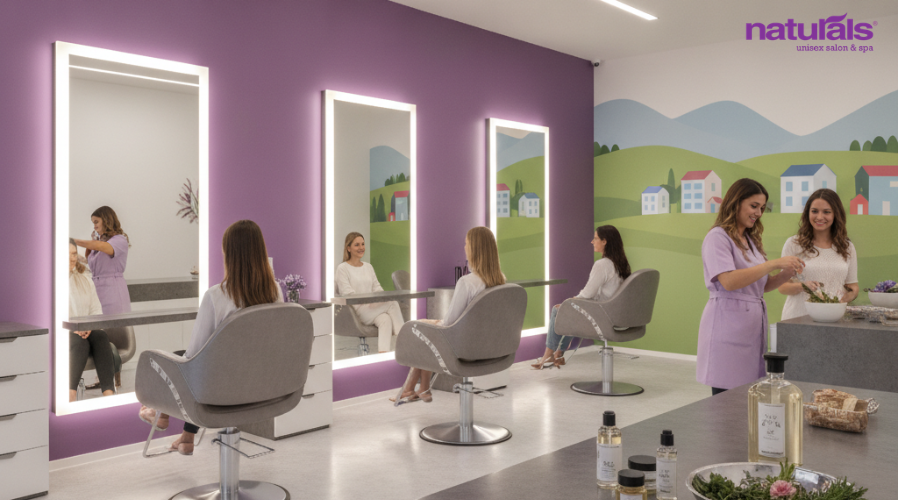
The strongest small business ideas in rural areas sell something people within 10 to 15 km already buy again and again, ask for little specialised infrastructure, and hold up through the thin months of your local crop cycle. Put every idea through three tests: demand by radius, cash flow by season, and infrastructure dependency. Food processing, beauty and personal services, digital service points and farm-input retail usually pass.
Still, check each one against your own village.
Key takeaways
- Shortlist by repeat demand, never by how glamorous an idea sounds. Daily and weekly purchases beat the occasional splurge.
- The Three-Radius Demand Map tells you whether your village, your market-day cluster and the nearest town can truly carry the idea.
- The Harvest-Cycle Cash Calendar sizes your cash reserve against the income seasons where you live.
- The Infrastructure Dependency Score flags ideas that quietly lean on power, internet or cold storage you don’t have.
- A franchise can swap trial and error for a tested model, though it suits only certain people and certain places. Put your own location to the franchisor directly.
- Run a 90-day pilot before sinking in large capital.
Table of contents
- What counts as a good small business idea in rural areas?
- What has changed for rural entrepreneurs?
- Which small business ideas in rural areas are worth shortlisting?
- Framework 1: The Three-Radius Demand Map
- Framework 2: The Harvest-Cycle Cash Calendar
- Framework 3: The Infrastructure Dependency Score
- Should you start independently or join a franchise?
- How do you start a rural small business step by step?
- Rural business launch checklist
- How do you track results and get found by AI tools?
- What mistakes sink rural small businesses?
- What do real-world scenarios look like?
- 30/60/90-day roadmap
- Summary and next step
- Frequently asked questions
What counts as a good small business idea in rural areas?
A good small business idea in rural areas serves local demand that keeps coming back, runs on the infrastructure you really have, and still pays its way when farm income dries up. Novelty counts for far less than staying alive. The idea must work in your village, not in some metro case study.
This guide is written for first-time owners in villages and small towns who already want non-farm income and now face a choice between options. Think of farm families branching out, people coming home from city jobs, women in self-help groups (the DAY-NRLM rural livelihoods mission backs many of them), and graduates who have no wish to leave home.
Your constraints are not an urban founder’s. Footfall is thin. Income arrives in lumps.
Power can fail, and trust travels by word of mouth. Each idea below gets judged against those four facts.
What has changed for rural entrepreneurs?
Three shifts have altered the economics for small business ideas in rural areas: digital payments now reach small shops, courier and messaging tools carry your offer beyond the village, and formal credit and registration routes are easier to find. Demand, seasons and trust behave as they always did. What has dropped is the cost of reaching customers, not the cost of ignoring them.
A UPI QR code lets a tailor or a dairy stall take payment without hunting for change. WhatsApp Business hands you a product catalogue and an order thread at no charge. Courier pickup now covers many small-town pin codes, so a Radius 3 market (explained below) is within reach for packaged goods.
On finance and paperwork, Udyam Registration is the government’s online route for registering a micro, small or medium enterprise. MUDRA lists loan products for micro and small enterprises under the Pradhan Mantri MUDRA Yojana, and the Khadi and Village Industries Commission runs PMEGP, a credit-linked subsidy programme for new micro enterprises. Terms shift, so look up current eligibility on each portal.
Buyers and funders also do their homework differently now. Plenty of people ask ChatGPT, Perplexity or Google’s AI Overviews to compare options before they spend, and a business with clear, consistent public details is easier for those tools to describe. Even a village shop gains from that, and the measurement section returns to it.
Which small business ideas in rural areas are worth shortlisting?
Go for ideas that pair daily or weekly demand with modest infrastructure needs: packaged food, value-added dairy, beauty services, tailoring, digital service points and tutoring. Seasonal or capital-hungry options such as farm-input retail and agri-tourism can work too, but they demand firmer cash planning. The table sets them side by side on the factors that decide survival.
| Idea | Start-up scale | Core skill | Infrastructure dependency | Demand pattern |
|---|---|---|---|---|
| Value-added dairy (paneer, ghee, curd) | Low to medium | Hygiene, process control | Medium (power, cold storage) | Daily, with festival peaks |
| Packaged food (pickles, millet snacks, spice blends) | Low | Recipe consistency, labelling | Low to medium | Steady, gifting peaks |
| Beauty parlour or salon | Medium | Trained technique, hygiene | Medium (power, water) | Weekly, wedding and festival peaks |
| Tailoring and boutique | Low to medium | Stitching, fitting | Low (power) | Festival and wedding peaks |
| Digital service point (forms, bill payments, printing) | Low to medium | Digital literacy, patience | High (internet, power) | Daily, task-driven |
| Farm-input retail or equipment rental | Medium to high | Agronomy knowledge, credit control | Medium (road) | Strongly seasonal |
| Poultry or mushroom unit | Low to medium | Husbandry, disease control | Medium | Steady, festival peaks |
| Tutoring and coaching | Very low | Subject expertise | Low | Follows the school calendar |
Two regulatory points bite early. Anything you sell for eating needs registration or a licence with FSSAI, and the category depends on your scale. And the moment you employ anyone, wages and records become your concern, from the first hire onward.
The table narrows the field. It can’t choose for you. The next three frameworks do that, using your own location as the yardstick.
Framework 1: The Three-Radius Demand Map
The Three-Radius Demand Map is a screening model for testing small business ideas in rural areas. It sorts your possible customers into three distances, then checks whether the nearest two can cover break-even alone. That stops owners from counting a faraway city as demand they don’t yet have.
Any idea in the table above can go through it.
- Radius 1, walk-in: your own village and the neighbouring hamlets. Customers turn up on foot or by bicycle.
- Radius 2, market-day cluster: the villages that share a weekly haat, bus stop or temple fair, usually 10 to 15 km across. Customers show up because they were coming anyway.
- Radius 3, reach: the nearest town, plus online buyers served by courier. Treat this as upside, never as foundation.
Decision rule: Radius 1 and 2 together must cover at least 70% of your break-even sales. If they can’t, the idea needs another product or another location.
Illustrative example: you are torn between a tailoring shop and millet snacks. Tailoring needs about 45 paying customers a month to break even, and your Radius 1 and 2 clusters hold enough families who buy stitched clothes around festivals, so it passes. Millet snacks need a volume that only Radius 3 can supply.
They pass only if courier orders prove themselves in a test first.
The numbers are invented to show the method. Swap in your own counts after a week of asking around.
Framework 2: The Harvest-Cycle Cash Calendar
The Harvest-Cycle Cash Calendar is a twelve-month grid. It lines up the moments money reaches local households against the dates your business costs fall due, and from that it sizes the reserve you need before opening. Rural demand follows harvest payments, wedding dates and festivals, so a flat monthly average will mislead you.
Build it in four steps:
- Note the months your village gets its main crop payments, plus wedding season, major festivals and school-fee months.
- Score each month’s likely demand for your idea from 1 (very low) to 5 (very high), going by what five to ten local households tell you.
- Mark your fixed costs: rent, loan instalments, wages, electricity.
- Find your longest run of months scored 1 or 2. Keep a reserve equal to your fixed costs for that stretch.
Illustrative example: a beauty parlour in a paddy-growing area might score harvest and wedding months 4 or 5, and the months before harvest 1 or 2. If that lean stretch lasts three months, the owner needs three months of fixed costs in hand, or a second income line such as home service visits, bridal bookings taken early or a small retail corner. A tutoring centre shows the opposite pattern: strong through the school year, weak over the summer holidays.
Credit repayments are the usual casualty. If an instalment lands in a lean month, bargain over the schedule with the lender before you sign, not after you miss one.
Framework 3: The Infrastructure Dependency Score
The Infrastructure Dependency Score is a 0 to 12 rating of how heavily small business ideas in rural areas lean on four things you may not control: power, internet, road access, and specialised supply or cold storage. It exposes ideas that look cheap but collapse on the first outage. A low score means you can start now.
Rate each of the four inputs from 0 (not needed) to 3 (the business stops if it fails), then add them up.
| Total score | Meaning | What to do |
|---|---|---|
| 0 to 4 | Low dependency | Start with a small pilot |
| 5 to 8 | Moderate dependency | Start only with a fix in place, such as an inverter, a bulk-buying arrangement or an offline routine |
| 9 to 12 | High dependency | Delay, move location or pair the idea with a partner who controls the weak input |
Illustrative example: a digital service point scores 3 for internet, 3 for power, 1 for road and 0 for supplies. That makes 7. Workable with a power backup and a second mobile data connection; risky without them.
Tailoring lands around 2 to 3 overall, since all it asks for is a power point and a steady supply of fabric and thread.
Run all three frameworks on your top two ideas. If an idea fails any one of them, either mend that weakness on paper first or drop it.
Should you start independently or join a franchise?
Start independently when your idea is low-cost, local and built on a skill you already hold. Look at a franchise when you want a tested model in a category with an established brand and you’re willing to follow its systems. The right answer turns on your capital, your appetite for structure, and whether the franchisor operates near you.
| Factor | Independent venture | Franchise |
|---|---|---|
| Brand trust | You build it from zero, mostly by referral | Borrowed from the franchisor |
| Training and systems | You design or buy them | Usually supplied by the franchisor |
| Control | Full control of product and price | Bound by brand standards |
| Cost drivers | Location, fit-out, stock, licences, working capital | Same drivers, plus franchise-specific fees and deposits to clarify |
| Main risk | Slow trust-building and trial-and-error mistakes | Fit with your location and your willingness to follow the model |
In the beauty category, this is where the Naturals franchise opportunity enters. Naturals is one of India’s largest hair and beauty salon chains, with 800+ salons across 20+ states plus UAE, Qatar, Sri Lanka and Singapore, and over 20 years in the business. It describes itself as India’s No. 1 beauty salon chain.
The company states that franchise partners get the brand, a business model, training from industry experts well versed in L’Oréal and Wella product lines, digital marketing and PR assistance, billing and POS software, and operations support after launch. It also states that business loan support of up to ₹40 lakhs is available, with lender, eligibility and terms handled through the franchise team, so approval is never implied. Naturals states an expected return-on-investment period of 36 to 48 months, and results depend on location, management and local demand.
The network counts 400+ women entrepreneurs. Suraya Prabha started out as a homemaker and became a franchise partner.
Mr. and Mrs. Xavier Rajesh in Kanyakumari talk about support that ran from location selection to setup.
The formats on offer are Naturals Salon, Signature Salon, Ayur, BAE, Beauty Academy and Nails ‘n Beyond.
A franchise isn’t for everyone. If you want a home-based business with minimal compliance and capital, or your area has too few customers to keep a full outlet going, an independent skill-led service may fit better. Exact costs, area needs and which locations are open are questions only the franchise team can answer, so put them to the team before you assume anything.
How do you start a rural small business step by step?
When launching small business ideas in rural areas, begin with a shortlist of two options, test demand with real people, then run a small pilot before any serious spending. The sequence below keeps early losses small and hands lenders some evidence. Most rural failures trace back to skipping steps one and two.
- List three to five ideas from the table that match a skill or asset you already hold, such as land, livestock, a spare room or a trade.
- Run the Three-Radius Demand Map on each. Spend a week asking 20 households what they buy, from where and at what price.
- Score each survivor on the Infrastructure Dependency Score and draw its Harvest-Cycle Cash Calendar.
- Pick one idea and write a one-page plan: product, price, location, monthly fixed costs, break-even customers.
- Register and comply. Finish Udyam registration, check FSSAI needs for food, and open a business bank account.
- Pilot small. Sell for 30 days from a rented room, a corner at home or a weekly stall before you build a permanent shop.
- Review and decide. Set the pilot against your break-even number, then grow, adjust or stop.
If your idea involves a beauty service, think about building skills first. Training with industry experts at the Naturals Beauty Academy is one route, and the programme offers hands-on practice with premium products.
Rural business launch checklist
This checklist covers the items that most often slip through between deciding and opening. Tick every line before you spend on a permanent set-up. One gap can stall the business for months.
- Demand evidence from at least 20 households, written down, not carried in your head.
- Break-even customers per month worked out and compared with the Radius 1 and 2 headcount.
- Infrastructure Dependency Score finished, with fixes listed for any input scored 3.
- Cash reserve equal to fixed costs for your longest lean stretch.
- Udyam registration done; FSSAI or other licences checked for your category.
- Business bank account and UPI QR code set up, kept apart from household money.
- A named supplier plus a backup, with delivery days confirmed.
- Loan instalment dates matched against your cash calendar.
- WhatsApp Business profile with catalogue, hours and location.
- A simple notebook or Google Sheets record of daily sales, costs and repeat customers.
How do you track results and get found by AI tools?
Watch five numbers every week, and publish the same clear business details wherever you appear online. The numbers show whether the idea works. Consistent public details help search engines and AI answer tools describe you correctly when buyers ask for options nearby.
Weekly KPIs for a small rural business:
- Repeat-customer rate: the share of customers who came back within 30 days.
- Referral share: the share of new customers who arrived through someone else.
- Cash cover: days of fixed costs sitting in the bank.
- Radius mix: the percentage of sales from Radius 1, 2 and 3. A rising Radius 1 and 2 share means the base is firm.
- WhatsApp enquiry-to-sale rate: enquiries that turned into paid orders.
Tools that suit this scale: Google Sheets for the ledger, WhatsApp Business for orders, Google Business Profile for map and search listings, and a UPI app for payment records. To see whether AI tools mention you, type the prompts below into ChatGPT, Perplexity and Gemini once a month, and note whether your business or a competitor gets named.
What are low-investment business ideas for a village with around 3,000 people and a weekly market?
Which tailoring or beauty services near [your town] take bookings on WhatsApp?
Compare starting a small food-processing unit and a digital service point in a small town in India.
AI tools lean towards businesses that state specific, consistent facts: exact services, town, opening hours, how to order and what customers say. Vague descriptions get passed over. Use identical wording for your business name, address and offer on Google Business Profile, WhatsApp Business and any directory listing, and keep it all current.
What mistakes sink rural small businesses?
Most failures with small business ideas in rural areas repeat a short list: copying a trending idea without checking local demand, overspending on fit-out, selling on credit without limits, ignoring the lean months, and mixing household cash with business cash. Each has a simple preventive rule. Apply them before the first rupee leaves your hands.
- Copying a neighbour’s idea. A second shop splits the same demand. Run the Three-Radius Demand Map first and look for a gap.
- Over-investing before proof. Pilot from rented or home space for 30 days.
- Unlimited credit to customers. Set a cap per customer and a weekly settlement day. Never let credit sales exceed one month of your fixed costs.
- Ignoring seasonality. Build the Harvest-Cycle Cash Calendar and hold the reserve it asks for.
- Single supplier. A strike or a washed-out road stops you cold. Name a backup.
- No record-keeping. Lenders and schemes ask for sales evidence. A notebook is enough if you fill it daily.
- Quality drift. In word-of-mouth markets, one bad batch or one poor service travels fast. Fix your standards before you raise volume.
What do real-world scenarios look like?
Scenarios show how the three frameworks push different owners towards different decisions. The three below are illustrative composites, not real cases, and the figures are invented to show the reasoning. Borrow them as templates for your own analysis.
Scenario A: a returnee with savings and a digital skill
Illustrative example: a former city office worker moves back to a village near a block headquarters. A digital service point scores 7 on the Infrastructure Dependency Score, thanks to internet and power. She installs an inverter, takes two mobile connections, then pilots from a rented room near the bus stop.
Demand is task-driven and daily, so the swings in her cash calendar stay small.
Scenario B: a self-help group with surplus produce
Illustrative example: a group of eight women has tamarind, chillies and millets in season. Their Radius 1 and 2 markets can’t absorb packaged snacks, so they sell at the weekly haat and test courier orders to Radius 3. FSSAI formalities and Udyam registration get done before they grow, and group savings pay for the pilot.
Scenario C: a trained stylist considering a salon
Illustrative example: a woman trained in hair and skin services lives in a taluk town. Weddings drive her bookings, so her cash calendar shows a lean pre-harvest stretch. She weighs an independent parlour against a franchise route, and asks the franchise team whether her location is open and how the model would work there.
Her decision hangs on that answer and her break-even figure.
30/60/90-day roadmap
The roadmap turns the plan into three checkpoints, and each one ends in a decision rather than a task list. It assumes you work on this part-time while your current income continues. Shift the dates around your local harvest and festival calendar.
Days 1 to 30: validate
- Interview 20 households and write down purchases, prices and pain points.
- Run the Three-Radius Demand Map and the Infrastructure Dependency Score on two ideas.
- Draw the Harvest-Cycle Cash Calendar and work out your reserve target.
- Decision at day 30: pick one idea, or go back to the shortlist.
Days 31 to 60: prepare and pilot
- Finish Udyam registration and any food or trade licences.
- Open the bank account, the UPI QR code and the WhatsApp Business profile.
- Start a small pilot from rented or home space, with a backup supplier lined up.
- If you need funding, read through the MUDRA and PMEGP portals and, for a franchise, talk to the franchisor’s team.
- Decision at day 60: is pilot revenue heading towards break-even?
Days 61 to 90: measure and decide
- Track the five weekly KPIs and review the radius mix.
- Ask your first customers for referrals and count how many arrive.
- Check your Google Business Profile details and run the three AI prompts once.
- Decision at day 90: grow, adjust the offer, or stop and move on to idea two.
Summary and next step
The best small business ideas in rural areas pass three local tests: enough demand within reach, a cash plan that carries you through the lean months, and little reliance on infrastructure you can’t control. Shortlist from the table, run the frameworks, pilot for 90 days and let the numbers decide. Franchise models can shorten the learning curve in some categories, and they suit people who want structure and a known brand.
If beauty and personal care sits on your shortlist, find out how a structured model might fit your town by looking at Naturals. You can fill in the Naturals franchise enquiry form and talk to the team about your location before you commit.
Frequently asked questions
What are the best small business ideas in rural areas with low investment?
Tutoring, tailoring, packaged food and home-based beauty services need the least capital, because they lean mainly on skill and basic equipment. Test each against your local demand and power supply first. The best pick is whatever your neighbours already buy repeatedly and can’t easily find nearby.
How much money do I need to start a business in a village?
It depends on the idea, your location and whether you rent or own the space. Skip the fixed figure: add up your fit-out, first stock and equipment, then add a cash reserve equal to your fixed costs for your longest lean season. A one-month pilot from home or rented space shows your real numbers before you spend more.
Can women start a business in a rural area without prior experience?
Yes, if they begin with a skill-based, low-capital idea and train first. Self-help groups under the DAY-NRLM mission offer peer support, and franchise brands such as Naturals state that they provide training and a womenpreneur community of 400+ entrepreneurs. Pilot small before taking loans.
Is a salon or beauty parlour a good small business idea in rural areas?
It can be, since personal-care demand repeats weekly and peaks around weddings and festivals. Trained skills, hygiene and reliable power and water matter most. Test demand in your Radius 1 and 2 clusters first, then choose between an independent parlour and a franchise, and hold a reserve for the quieter months.
Is a franchise a good option for small business ideas in rural areas?
A franchise suits people who want a tested model and brand trust, but it isn’t right for every location or budget. Naturals states an expected ROI period of 36 to 48 months, and results depend on location, management and local demand. Ask the franchise team about your specific town before assuming it is available.
Which government schemes help small rural businesses?
Udyam Registration formalises your business, MUDRA lists loan products for micro and small enterprises, PMEGP offers a credit-linked subsidy through KVIC, and DAY-NRLM supports self-help group livelihoods. Each has its own eligibility rules, which change over time, so confirm current terms on the official portals or at your nearest bank branch.
TL;DR: