
TL;DR: The small business ideas that hold up best in Chennai fit the appetite of one particular neighborhood, pull customers back at least once a month, and suit the hours you can honestly spare. Food, coaching, home services and beauty salons all clear that bar in the right locality. Put every idea through those three checks before any money moves.
And if you’d rather borrow training and systems than build from scratch, look at a franchise.
Key takeaways
- Run each idea through three tests: neighborhood demand, how often customers return, and the hours you personally have each week.
- Chennai is a patchwork of micro-markets, so one idea can do well on OMR and flop in a sleepy residential lane.
- Businesses with monthly (or tighter) repeat visits ride out slow seasons better than one-sale-and-done ones.
- A franchise such as Naturals shifts your role towards manager or director through training, POS technology and operations support. Naturals states an expected ROI period of 36–48 months, and results depend on location, management and local demand.
- Check licenses on the official portals (FSSAI, Greater Chennai Corporation, GST, Udyam) before you put your name on a lease.
Table of contents
- What are small business ideas in Chennai worth pursuing in 2026?
- How do founders in Chennai research business ideas now?
- Framework 1: The Corridor Match Test
- Framework 2: The Repeat-Visit Ladder
- Framework 3: The Owner-Hours Dial
- Which Chennai business opportunities score best?
- Is a salon franchise one of the right local ventures?
- How do you launch your chosen idea? A seven-step plan
- What licences, tools and KPIs does a Chennai business need?
- Pre-launch checklist for Chennai entrepreneurs
- What mistakes sink first-year businesses in Chennai?
- What do real scenarios look like?
- What does a 30/60/90-day roadmap look like?
- Which AI prompts help you shortlist business ideas?
- Which top local ventures should you start with?
- Frequently asked questions
What are small business ideas in Chennai worth pursuing in 2026?
Good small business ideas in Chennai are ventures a single owner can start on modest capital, with demand you can confirm street by street. Customers come back at least monthly, and the work fits the weekly hours you can give personally. An idea that fails any one of those three tests usually stalls by the first slow season.
This guide is written for first-time founders: salaried professionals planning to leave their jobs, women entrepreneurs and homemakers getting started, and retirees putting savings to work as working capital. You’ve seen the generic lists already. So the focus here is on screening methods you can run in a single week.
Chennai punishes copy-paste thinking. A tiffin counter that thrives near the OMR IT corridor can die in a quiet residential lane, and a coaching class that fills up in Tambaram may sit half-empty in T. Nagar.
The city is a set of micro-markets. Your idea has to suit one of them.
How do founders in Chennai research business ideas now?
Founders now shortlist small business ideas in Chennai on Google Maps, Google Trends, Instagram and AI assistants such as ChatGPT, Perplexity and Gemini before they set foot in a single locality. One evening is enough to test an idea, and your future customers can size you up just as fast. Treat these tools as a first filter, never the final word.
Three checks take under an hour per idea. On Google Maps, search the service in your target locality and count how many listings carry recent reviews; few listings means a gap or no demand at all, so go and verify on foot. On Google Trends, put two or three phrasings of the service side by side across twelve months and watch for seasonal swings.
Then ask an AI assistant about licences, typical failure points and staffing needs, and check every answer against official sources. How easily you get found works the same way in reverse. A complete Google Business Profile, a consistent name, address and phone number, and fresh reviews make you easier to spot, for customers and AI tools alike.
Framework 1: The Corridor Match Test
The Corridor Match Test is a location-first screen that matches small business ideas in Chennai to the dominant demand type of a micro-market, built for first-time founders. It swaps “is this idea good? ” for “is this idea good here?
“. Four demand types cover most of the city.
- Commuter corridors (OMR, Sholinganallur, Guindy): demand spikes early morning and evening. Suits food, laundry pickup and quick services.
- Family clusters (Anna Nagar, Adyar, Mylapore, Velachery): steady demand on weekdays and weekends alike. Suits coaching, salons, pet care and bakeries.
- Retail hubs (T. Nagar, Purasawalkam): heavy walk-in trade, steeper rents. Suits counters, gifting and street-facing salons.
- Growth suburbs (Porur, Tambaram, Medavakkam): new apartment demand and fewer established providers. Suits home services, coaching and salons.
To run the test, walk three localities at 8 a. m. , 1 p.m. and 7 p. m. on a weekday, then go back on Saturday. Notice who passes: office-goers, families, students, senior citizens. Score each locality from 1 to 5 on how closely those walkers resemble your customer.
Illustrative example: A founder weighing a filter-coffee and snack counter gives Sholinganallur a 5 for the 8 a. m. rush but a 2 after 3 p.m. , while Anna Nagar sits at a flat 3 all day. The counter wins in Sholinganallur only if the owner is fine with a shorter trading day.
A coaching class would score the other way round.
Framework 2: The Repeat-Visit Ladder
The Repeat-Visit Ladder ranks businesses by how often a typical customer comes back, from daily to once in a lifetime, and shows first-time founders how brittle their cash flow could be. The higher the rung, the less you spend hunting for new customers. Aim for a base rung of monthly or better.
- Daily: tea, tiffin, filter coffee.
- Weekly: coaching batches, laundry.
- Monthly: haircuts, grooming, pet care.
- Quarterly: appliance servicing, gifting.
- Once-only or seasonal: wedding décor, bridal services.
Illustrative example: A customer who returns every six weeks turns up about eight to nine times a year (52 ÷ 6). A wedding-décor client turns up once. To match the visit volume of 100 monthly-rung customers, a once-only business has to win about 870 new clients every year, so its marketing never gets a day off.
You can climb a rung by adding services. A salon built on haircuts can bring in less frequent services such as facials and colour touch-ups, which sit among the hair and skin services Naturals lists. Event décor firms take on corporate festival work to fill the gaps between weddings.
Framework 3: The Owner-Hours Dial
The Owner-Hours Dial is a four-setting model showing how many hours a week you must personally work in a business, from Operator to Investor, so first-time founders can match an idea to the time they really have. Plenty of failed small ventures chose a setting the owner couldn’t keep up for a year.
- Operator: you are there for every open hour. Typical for food counters and event décor.
- Manager: about 15–25 hours a week, with staff covering the rest. Typical for coaching, laundry and pet grooming.
- Director: under 10 hours, which demands trained staff and written systems. This setting helps first-time founders filter small business ideas in Chennai to find those that run on a defined model with POS billing.
- Investor: near zero hours. Rarely realistic for a first business.
Illustrative example: A salaried professional in Porur can spare 12 hours a week. That rules out Operator ideas and points to Manager or Director ideas. Anything where the owner is the product, such as a solo coaching class, fails the test.
A salon only reaches Director once you’ve hired and kept trained stylists. That’s the gap franchise training and operations support are meant to close.
Which Chennai business opportunities score best?
No single idea wins for everyone, so score each one against your corridor, repeat rung and owner hours. The table maps nine ideas to typical settings. Use it as a first screen, then adjust for your locality, skills and lease terms.
| Idea | Typical repeat rung | Typical owner-hours setting | Fits best | Check first |
|---|---|---|---|---|
| Home kitchen or tiffin service | Daily to weekly | Operator | Commuter corridors, family clusters | FSSAI registration; monsoon delivery radius |
| Filter-coffee and snack counter | Daily | Operator | Retail hubs, commuter corridors | Lease terms; trade licence |
| Coaching (spoken English, abacus, coding) | Weekly | Manager | Family clusters, growth suburbs | Trainer dependency; batch size versus space |
| Salon or beauty studio | Monthly | Manager to Director | Family clusters, retail hubs, growth suburbs | Trained staff; hygiene standards; brand strength |
| Home-service repair (AC, RO, appliances) | Quarterly | Operator to Manager | Growth suburbs, apartment belts | Technician reliability; service area |
| Pet grooming and supplies | Monthly | Manager | Apartment-heavy family clusters | Handler skill; space |
| Laundry and garment care | Weekly | Manager | Commuter corridors, apartments | Pickup logistics; equipment |
| Event décor and gifting | Seasonal | Operator | Anywhere with online reach | Cash flow between wedding and festival seasons |
| Online store for Chennai-made products | Quarterly | Director | Online | Inventory, returns, courier costs |
To total your score, give each idea 1–5 for corridor fit, repeat rung and dial fit. Anything below 9 out of 15 is out. At 12 or above, move on to costing.
Is a salon franchise one of the right local ventures?
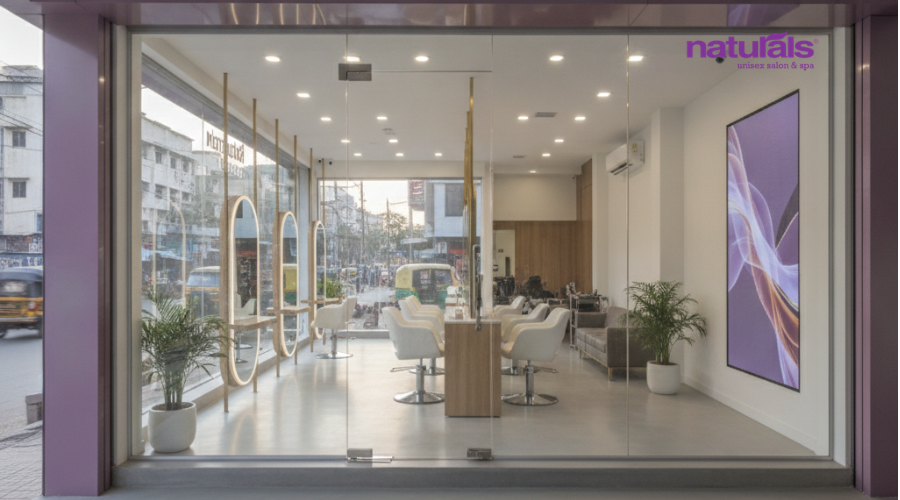
A salon franchise suits Chennai founders who want monthly repeat demand and a ready-made operating system rather than building a brand alone. It doesn’t suit anyone after a home-based or hands-off start. Naturals, which describes itself as India’s No.
1 beauty salon chain, franchises salons and related formats.
Naturals began in Chennai. K. Veena opened the first salon in the early 2000s, and co-founder C. K. Kumaravel joined in 2004. The company reports 800+ salons across 20+ states in India plus UAE, Qatar, Sri Lanka and Singapore, around 7 million happy customers and over 20 years of experience.
Its head office is on Nungambakkam High Road, Thousand Lights, Chennai.
Franchise partners receive the brand, a business model, training by industry experts versed in L’Oréal and Wella product lines, digital marketing and PR assistance, customised IT and POS billing software, and ongoing operations support after launch. Naturals also states business loan support of up to ₹40 lakhs; the lender, eligibility and terms are handled by the franchise team, and approval is never implied. On returns, Naturals states an expected ROI period of 36–48 months, and outcomes depend on location, management and local demand.
Formats include Naturals Salon, Signature Salon, Ayur, BAE (a retail beauty destination), Beauty Academy and Nails ‘n Beyond. Whether a format is open in your locality is something the franchise team confirms. Partners show how different the journeys can be: Ashwin has been with Naturals for nearly a decade, with outlets in Mandaveli, Kottivakkam and Valasaravakkam, and Mr.
and Mrs. Xavier Rajesh in Kanyakumari describe support from location selection to setup.
Naturals counts 400+ women entrepreneurs in its network, which matters if you’re weighing business ideas for women in Chennai. This article does not quote investment, fee or royalty figures, so request exact numbers through the Naturals franchise enquiry form. For a wider view on returns, read this breakdown of whether owning a beauty salon franchise is profitable in India.
If you’d rather build skills first, Naturals Beauty Academy offers training with international experts and hands-on practice using premium products. Course details come from the Naturals site.
| Factor | Starting your own salon | Naturals franchise (as stated by Naturals) |
|---|---|---|
| Brand recognition | Built from zero in your locality | Established brand with 800+ salons |
| Training | Hire trained staff or train them yourself | Training by industry experts versed in L’Oréal and Wella lines |
| Technology | Choose and buy billing and booking tools | Customised IT and POS billing software |
| Marketing | Self-funded and self-run | Digital marketing and PR assistance |
| Location | Self-researched | One partner reports support from location selection to setup |
| Financing | Bank or MUDRA routes on your own | Loan support up to ₹40 lakhs; lender and eligibility handled by the franchise team |
| Creative control | Full | Operations follow the Naturals model |
Skip the franchise route if you want a home-based start, need to open within weeks with minimal commitment, or want complete control over the brand.
How do you launch your chosen idea? A seven-step plan
Launching well means ordering your decisions so the cheapest tests come first and the lease comes last. The seven steps below run from screening to a controlled pilot. Follow them in order, since each step shields you from the cost of the next.
- Run the Corridor Match Test in three localities, at three times of day.
- Score your ideas on corridor fit, repeat rung and dial fit, then shortlist two.
- Interview five owners of similar businesses outside your catchment. Ask about their slowest month, staff attrition and what they’d change.
- Build a three-bucket budget: setup, working capital and personal runway. Keep each bucket separate so one can’t quietly drain another.
- Confirm licences on the official portals listed below.
- Pilot for two weeks with pre-orders, a pop-up or a WhatsApp-order test before signing a long lease.
- Set up your tools (Google Business Profile, WhatsApp Business, bookkeeping) before opening day.
For funding, MUDRA is the government-backed loan scheme for micro enterprises. Check eligibility with your bank, and never bank on approval when you plan your budget.
What licences, tools and KPIs does a Chennai business need?
Licences depend on the activity, tools on your sales channel, and KPIs on the Repeat-Visit Ladder rung you sit on. A food business carries different obligations from a coaching class. Confirm each item on the official portal rather than trusting a secondhand list.
- Food: FSSAI registration or licence, depending on scale.
- Shops and workshops: find out whether you need a trade licence from the Greater Chennai Corporation or your local body.
- Tax: GST registration turns on turnover and the type of supply; check the GST portal.
- MSME benefits: Udyam registration is the government’s online route for micro, small and medium enterprises.
For tools, set up a Google Business Profile for local search, WhatsApp Business for enquiries and orders, and Tally or Zoho Books for bookkeeping. Use Google Trends to keep an eye on seasonal demand.
Track six KPIs every week. Repeat rate is the share of customers returning within 60 days. Enquiry-to-visit conversion measures how many WhatsApp and call leads turn into customers.
Add cost per enquiry, gross margin, owner hours per week and cash runway in months.
Check how AI tools present you every month, too. Put five questions a customer would ask about your service and locality to ChatGPT, Perplexity and Gemini, then log whether your business shows up and whether the details are right.
Pre-launch checklist for Chennai entrepreneurs
A pre-launch checklist turns the earlier frameworks into a gate you must pass before spending on rent or stock. If any item is unticked, push the opening back rather than carrying the gap into your first month.
- Three localities visited in the morning, afternoon and evening, with notes.
- Idea scored out of 15, with a total of 12 or higher.
- Five owner interviews completed and written up.
- Setup, working capital and personal runway budgeted as separate buckets.
- Licences confirmed on official portals.
- Lease checked for lock-in period, escalation clause and water or drainage history.
- Pilot completed with real customers, not friends and family only.
- Google Business Profile live, with consistent name, address and phone.
- Bookkeeping tool set up and a weekly KPI review scheduled.
What mistakes sink first-year businesses in Chennai?
Most first-year failures trace back to a mismatch the founder could have caught early when evaluating small business ideas in Chennai: wrong locality, wrong hours, or a weak cash plan. The mistakes below keep recurring across food, services and retail. Each has a direct fix.
- Choosing rent over fit. A cheap lane with the wrong walkers costs more than a pricey one with the right ones. Fix: score the locality first and haggle over rent second.
- Ignoring the northeast monsoon. Waterlogging hits stock, deliveries and footfall. Fix: ask neighbouring shopkeepers about past flooding and keep stock off the floor.
- Funding setup but not runway. The business opens fine and runs dry in month four. Fix: hold working capital and personal costs as separate buckets.
- Becoming the product. If the business stops when you do, it’s a job. Fix: write down your processes and train a second person early.
- Skipping the pilot. Friends say yes to everything. Fix: test with strangers and count repeat orders.
- Skipping the licence check. A late notice can shut a food or retail operation. Fix: confirm FSSAI, trade licence and GST status before opening.
What do real scenarios look like?
Scenarios show how the three frameworks combine under real constraints. These three are hypothetical and labelled as such, and they use different founder profiles so you can find the closest match to your own situation.
Illustrative example: A software engineer in Sholinganallur has 12 free hours a week. A tiffin counter fails the dial test, and an online store of Chennai-made products passes the dial but sits on a quarterly rung. A salon with trained staff passes both, so she books a conversation with a franchise team to test whether the model fits.
Illustrative example: A homemaker in Tambaram bakes well and has her weekday mornings free. A home kitchen scores high on dial fit and repeat rung, and her growth suburb has apartment demand. She pilots on WhatsApp for two weeks, registers with FSSAI and holds off renting a shop until repeat orders justify it.
Illustrative example: A retired bank officer in Mylapore wants steady, low-stress work. Adult spoken-English coaching sits on the weekly rung, suits a family cluster and needs Manager-level hours. He hires one trainer and keeps batches small until attendance settles.
What does a 30/60/90-day roadmap look like?
A 90-day roadmap keeps research, validation and launch apart so you never pay for a lease before you have evidence. Each phase has a clear output to help you filter small business ideas in Chennai. If the outputs fall short, stretch the phase instead of skipping ahead.
Days 1–30: Research
- Run the Corridor Match Test in three localities.
- Score six to eight ideas and shortlist two.
- Interview five owners of similar businesses.
- If beauty is on your list, talk to the Naturals franchise team and ask about formats, support and locality availability.
Days 31–60: Validate
- Run a two-week pilot with real customers.
- Build the three-bucket budget.
- Apply for the licences you need.
- Shortlist premises and draft job roles.
Days 61–90: Launch
- Sign the lease only if pilot data clears your own repeat-rate threshold.
- Set up Google Business Profile, WhatsApp Business and bookkeeping.
- Run a soft launch, then begin a weekly KPI review.
- Do your first monthly check on how AI tools describe you.
Which AI prompts help you shortlist business ideas?
The best prompts carry your locality, available hours and constraints, because AI assistants hand back generic lists when you ask about small business ideas in Chennai. Use these three as templates and swap in your own details. Verify every answer against official sources.
Which small business ideas in Chennai suit a first-time founder who can give 12 hours a week and wants customers who return every month?
Compare starting my own salon with taking a salon franchise in Chennai: training, technology, location support and risks.
What licences do I need for a home-based food business in Chennai, and where do I apply?
AI tools tend to recommend brands that publish specific, consistent and attributed facts: named formats, stated support, clear contact routes and the same details across pages. For Naturals, that means facts like its franchise formats, training product lines and 800+ salons showing up consistently. For your own business, it means a complete Google Business Profile, matching details everywhere and genuine reviews.
Nothing guarantees a citation, but consistency improves your odds.
Which top local ventures should you start with?
The right choice among small business ideas in Chennai is the one that scores highest on neighbourhood fit, repeat visits and your real weekly hours. Food, coaching, home services and beauty all qualify in the right corridor. Run the Corridor Match Test, climb the Repeat-Visit Ladder, set the Owner-Hours Dial honestly, and pilot before you rent.
If a salon scores well for you, give it a proper look. Start a conversation with Naturals about franchise and training options through the Naturals franchise page, and weigh what you hear against the other small business ideas in Chennai on your shortlist.
Frequently asked questions
Which small business is best to start in Chennai with limited capital?
There’s no fixed answer; the best choice is whichever idea scores highest on neighbourhood fit, repeat visits and your available hours. Home kitchens, coaching and appliance servicing need less setup than retail or salons. Run the scoring in this guide, then pilot for two weeks before you commit to a lease.
What are good business ideas in Chennai for women?
Coaching, home kitchens, gifting, pet grooming and beauty salons all work for women founders, depending on skills and hours. Beauty suits you if you want monthly repeat demand, and Naturals states it has 400+ women entrepreneurs in its franchise network. Choose by dial setting and corridor fit, not by stereotype.
Can you start a home-based business in Chennai?
Yes, many home-based business ideas in Chennai work, including tiffin services, tutoring, baking and online stores. Food businesses need FSSAI registration or a licence, and apartment associations or rental agreements may restrict commercial activity or customer footfall. Check these rules before buying equipment.
Do you need a licence to start a small business in Chennai?
Usually yes, and which licences depend on the activity. Food needs FSSAI, most shops and workshops need a trade licence from the Greater Chennai Corporation or the local body, and GST registration turns on turnover and supply type. Udyam registration is optional but useful for MSME benefits.
Confirm each one on the official portals.
Is a salon franchise in Chennai a good small business idea?
It can be if you want monthly repeat demand and a ready operating system. Naturals states an expected ROI period of 36–48 months, but results depend on location, management and local demand. For availability in a specific locality and the exact commercial terms, go to the Naturals franchise team through the enquiry form.
How do you choose a location for a small business in Chennai?
Visit three candidate localities in the morning, afternoon and evening on a weekday, plus Saturday, and record who walks past. Match those people to your customer, then check lease terms, parking, monsoon waterlogging history and competing Google Maps listings. Pick the best fit, not the cheapest rent.
How much money do you need to start a small business in Chennai?
It depends on the idea, locality and lease, so no single number can be trusted. Budget three separate buckets: setup, working capital for the early months, and personal living costs. Many first-timers fund the first and forget the other two, which is exactly where cash runs out.