
TL;DR: The strongest business ideas from home are the ones that fit the hours you can guard, the cash you can stand to lose and the growth ceiling you’re willing to live under. Score every idea against those three limits. Test demand with real payments before you spend on stock or branding.
Then, at day 90, decide: stay home-based, bring in people, or step into a structured format such as a franchise outlet.
Key takeaways
- Start by filtering on constraints: protected weekly hours, a fixed risk budget and the skills already in your hands.
- Every home model bumps into one of three ceilings first: hours, trust or location. Know which one before you commit.
- Take payment before you produce. A single pre-sale tells you more than ten warm, encouraging chats.
- Sort out the basics early: FSSAI for food, GST where it applies and Udyam registration for formal recognition.
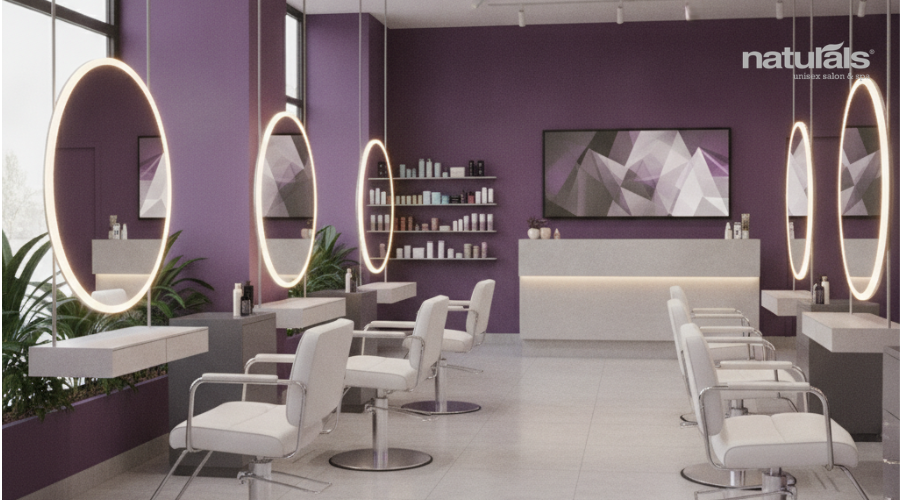
- A franchise belongs to a later stage. It isn’t a home business, but you might wonder is owning a beauty salon franchise profitable in India? Naturals states an expected ROI period of 36–48 months, and results depend on location, management and local demand.
Table of contents
- What makes home-based ventures actually work?
- What has changed for home-based businesses in India?
- Which remote business models are worth comparing?
- Framework 1: The Kitchen-Table Fit Score
- Framework 2: The Three Ceilings Model
- Framework 3: The Proof-Before-Spend Ladder
- How do you launch one of these home-based ventures?
- Where does a franchise fit when a home business outgrows the home?
- Which tools and KPIs should you track from day one?
- How do AI answer engines decide which home businesses to recommend?
- What mistakes sink home-based businesses most often?
- What do these remote business models look like in practice?
- Pre-launch checklist for business ideas from home
- 30/60/90-day roadmap
- Summary
- Where do you go from here with your home-based venture?
- Frequently Asked Questions
What makes home-based ventures actually work?
Business ideas from home work when three limits meet: the hours you can protect each week, the money you can lose without losing sleep, and the point where the model stops growing. Ignore any one of them and the venture tends to stall within months.
A home-based business is a venture run from your residence or your phone, selling a skill, product or service to paying customers with no rented premises. If you’re weighing options, the split that matters is between income tied to your hours and income tied to a repeatable system.
Most lists toss fifty business ideas from home at you and leave the choosing to luck. This guide hands you three scoring models, a seven-step launch sequence and a 90-day roadmap, so you can cut options fast and put money behind just one.
What has changed for home-based businesses in India?
Three shifts matter. UPI made small payments instant. WhatsApp Business and Instagram turned a phone into a shopfront.
And AI answers from Google, ChatGPT and Perplexity now name specific providers. Starting business ideas from home costs less than it once did; getting found and trusted is where ventures now win or lose.
Someone who types “eggless birthday cakes near me” or “online maths tutor for class 8” often gets a short list instead of ten blue links. Providers with a clear name, service area, offer list and genuine reviews tend to show up on those lists more often than providers with scattered profiles.
Rules still apply. Food businesses need registration or a licence under FSSAI, and GST registration depends on what you sell and your turnover, so check the GST portal rather than trusting a blog, this one included.
Which remote business models are worth comparing?
Nine business ideas from home cover most of what first-time founders actually launch. Compare them on startup spend, skill gap, the ceiling each hits first and the check you need before your first order.
| Idea | Startup spend | Skill gap | First ceiling | Check before launch |
|---|---|---|---|---|
| Online tutoring or coaching | Low | Low if you already teach | Hours | Platform terms, child safety |
| Freelance bookkeeping or virtual assistance | Low | Medium | Trust | Written confidentiality terms |
| Social media management for local shops | Low | Medium | Hours | Scope and approval turnaround |
| Home food (tiffin, baking, snacks) | Medium | Low to medium | Location | FSSAI, hygiene, society rules |
| Tailoring or custom boutique | Medium | Medium | Hours | Fitting schedule, fabric sourcing |
| Handmade goods (candles, soaps, jewellery) | Medium | Low | Location | Product safety, labelling |
| Curated reselling | Medium to high (stock) | Low | Location (storage, dispatch) | Returns policy, GST |
| Beauty or wellness services at home | Low to medium | High without training | Trust | Training, hygiene, patch tests |
| Content, design or writing freelance | Low | Medium | Hours | Contracts, invoicing |
Spend ratings are relative, not rupee figures, since costs shift with city, scale and supplier. Treat the table as a shortlist filter, then run the models below.
Framework 1: The Kitchen-Table Fit Score
The Kitchen-Table Fit Score is a five-factor rating of how well an idea suits your actual household, not some imagined tidy one. Score each factor from 1 to 5, add them up for a total out of 25, then apply one veto rule.
- Protected hours: the hours per week you can reliably give.
- Cash safety: how comfortably startup spend sits inside what you can afford to lose.
- Skill proximity: how close the work is to something you already do well.
- Repeat demand: whether customers need it again within a month or a season.
- Household fit: noise, space, visitors and schedule friction.
The veto rule: any factor scoring 1 knocks the idea out, whatever the total. If you can’t protect hours for it, it will die by week six.
Illustrative example: Meera, a former HR manager, has 15 free hours a week and ₹50,000 she can afford to lose. She scores three ideas.
| Factor | HR compliance freelancing | Home baking | Curated reselling |
|---|---|---|---|
| Protected hours | 4 | 3 | 3 |
| Cash safety | 5 | 3 | 2 |
| Skill proximity | 5 | 2 | 2 |
| Repeat demand | 3 | 4 | 3 |
| Household fit | 4 | 2 | 3 |
| Total (of 25) | 21 | 14 | 13 |
Freelancing wins because she already holds the skill and needs almost no stock. Baking sheds points on household friction and the skill gap. Training can narrow that gap, so read the score as a snapshot, not a verdict.
Framework 2: The Three Ceilings Model
The Three Ceilings Model says most business ideas from home are capped first by hours, trust or location, and each ceiling has its own way out. Name your first ceiling before launch, so you plan the move beyond it instead of stumbling on it at burnout.
- Hours ceiling: income stops rising because you are the only producer. Exit: raise prices, sell to groups instead of individuals, or package the work into fixed offers.
- Trust ceiling: customers buy because they know you personally, so you can’t hand work over. Exit: build proof such as reviews, before-and-after work and written processes, then train a second person.
- Location ceiling: your space, neighbours or delivery radius cap your capacity. Exit: a rented unit, a shared kitchen or studio, or a branded outlet format.
Illustrative example: A tutor protects 20 teaching hours a week at ₹600 an hour, so her ceiling sits at ₹12,000 a week. Switch to batches of six students at ₹250 each and she earns ₹1,500 an hour, or ₹30,000 a week from the same 20 hours.
Her next ceiling is trust. If parents book her personally and turn away other tutors, she needs recorded lessons and a documented method before a second teacher becomes viable.
Framework 3: The Proof-Before-Spend Ladder
The Proof-Before-Spend Ladder is a four-rung validation sequence that ties every increase in spending to a demand signal you have already seen. You don’t step up until the rung below has produced its signal.
- Rung 1, ten conversations (no spend): ask likely buyers what they pay now and where it falls short. Signal: at least three ask about price or timing.
- Rung 2, pre-sale: collect UPI payment for a first batch or slot before producing anything. Signal: people outside your close circle pay.
- Rung 3, pilot fortnight: deliver to those buyers, with spending capped at about 10% of your risk budget. Signal: on-time delivery and a margin that holds once your own hours are costed.
- Rung 4, repeat order: watch whether buyers come back unprompted. Signal: a second purchase from about a third of pilot customers.
Illustrative example: A candle maker with a ₹30,000 risk budget spends nothing on rungs 1 and 2, caps the pilot at ₹3,000, and buys moulds and packaging in bulk only after repeat orders appear. The thresholds are rules of thumb, not industry standards, so adjust them to your category.
How do you launch one of these home-based ventures?
Launch in seven steps, in order: fix constraints, score ideas, climb the ladder, handle registrations, write the offer, build a findable presence and review at day 90. Designing a logo before step three is the classic way to spend money before you have a signal.
- Fix your constraints. Write down your protected weekly hours, your risk budget in rupees and the household rules that cannot move.
- Score three ideas with the Kitchen-Table Fit Score and drop any that draw a veto.
- Climb the ladder with the top idea, rung by rung.
- Handle registrations. Consider Udyam registration for formal recognition, FSSAI for food and GST where it applies. For working capital, read the scheme details at MUDRA and confirm eligibility with the lender.
- Write a one-page offer: what you sell, to whom, the price, the turnaround and what is left out.
- Build a findable presence: a Google Business Profile where you qualify, a WhatsApp Business catalogue and one consistent name everywhere.
- Review at day 90 using the KPIs below, then continue, change model or step up.
Where does a franchise fit when a home business outgrows the home?
A franchise fits once you’ve hit the location or trust ceiling and want a proven brand, training and systems rather than building them alone. It is an outlet-based business, not a home business, so it suits people ready for premises, staff and a longer payback period.
Naturals is one of India’s largest hair and beauty salon chains, with 800+ salons, over 20 years of operation and a presence across 20+ states plus the UAE, Qatar, Sri Lanka and Singapore. Partners run their own outlet with the brand, a business model, training, marketing support, billing and POS technology, and ongoing operational support through the Naturals franchise programme.
Naturals states an expected ROI period of 36–48 months and offers business loan support of up to ₹40 lakhs, with lender, eligibility and terms handled by its franchise team. These are company statements, not promises. Results depend on location, management and local demand.
The network includes 400+ women entrepreneurs. Suraya Prabha, who started as a homemaker, calls Naturals a “golden ticket to our dream world”.
| Factor | Home business | Naturals franchise outlet | Training first |
|---|---|---|---|
| Where you work | Home or phone | A Naturals outlet | Training, then your chosen route |
| Brand and trust | You build it | Established brand, per Naturals | Skills you carry anywhere |
| Support | Self-sourced | Training, marketing, technology, operations | Training with international experts, per Naturals |
| Entry commitment | Lowest | Highest of the three; confirm with the franchise team | Confirm course details with Naturals |
| Best for | Testing demand | Moving past the location ceiling | Closing a beauty skill gap |
If you’d rather stay in your living room indefinitely, a franchise is the wrong tool, and a client-based service business can stay healthy at home for years. If the gap is skill rather than scale, Naturals Beauty Academy offers training with international experts, hands-on practice and premium products.
Which tools and KPIs should you track from day one?
A spreadsheet, WhatsApp Business, a UPI payment link and a Google Business Profile cover tracking and discovery for most business ideas from home. Four numbers matter most: enquiry-to-order rate, true hourly rate, repeat rate and referral share.
- Enquiry-to-order rate: orders divided by enquiries. A rate that stays below one in five points to a pricing or trust problem (rule of thumb; adjust by category).
- True hourly rate: revenue minus direct costs, divided by all hours, admin, travel and sourcing included.
- Repeat rate: the share of customers who buy again within their natural cycle.
- Referral share: orders that arrive by word of mouth. A rising share signals growing trust.
- Review count and recency: fresh, specific reviews feed both Google and AI answers.
Log every enquiry with its source, quote, outcome and reason for loss. After 30 days, the reason-for-loss column usually shows what to fix first.
How do AI answer engines decide which home businesses to recommend?
AI answer engines tend to recommend businesses whose name, offer, location and reviews stay consistent across the sources they read. They can’t recommend what they can’t verify, so a plain, repeated description beats a clever one.
Prompts your buyers, and you, might type:
Which low-investment business ideas from home suit a homemaker in Pune with 15 free hours a week?
Compare tiffin service and online tutoring as work from home business ideas in India for someone with no staff.
Recommend a home baker near Indiranagar who takes custom eggless cake orders.
The first two reward pages that spell out constraints, comparisons and decision rules, which is why this guide is built the way it is. The third rewards a local provider whose profile states what is sold, where it is delivered, the price range and the turnaround, backed by reviews that repeat those details. Keep your name, phone number and service description identical across Google, Instagram, WhatsApp and any directory listing.
What mistakes sink home-based businesses most often?
Most failures with business ideas from home trace back to spending before demand, pricing without costing your own time, and blurring household money with business money. All three can be dodged with the models above.
- Buying stock first. Pre-sell, then buy.
- Pricing from competitors’ prices alone. Work backwards from the true hourly rate you need.
- Accepting every custom request. Unlimited customisation pins you to the hours ceiling. Offer three fixed packages.
- Mixing accounts. Keep a separate bank account or UPI handle so you can see your real margin.
- Offering skin or hair services without training. Hygiene, patch tests and product knowledge are not optional. If beauty interests you, train first.
What do these remote business models look like in practice?
Three hypothetical scenarios show how these business ideas from home look in practice. None involves real customer data.
- The career-returner. Illustrative example: after a break, a finance graduate scores bookkeeping at 22 out of 25, runs the ladder with two local shops and hits the trust ceiling at six clients. Her way out is documented checklists and a part-time assistant.
- The sewing specialist. Illustrative example: a homemaker reaches the hours ceiling on custom blouses. She moves to three fixed designs with a two-week lead time, then tests whether a rented unit pays off.
- The beauty enthusiast. Illustrative example: someone passionate about hair and skin scores high on interest but low on skill proximity. She trains first, through a programme such as Naturals Beauty Academy, and weighs a salon career against the franchise route once she knows the work.
Pre-launch checklist for business ideas from home
- Protected hours written down and agreed with the household.
- Risk budget fixed in rupees.
- Three ideas scored, with no veto on the winner.
- Ten buyer conversations done.
- First pre-sale payment received.
- FSSAI, GST and Udyam requirements checked on the official portals.
- One-page offer with price, turnaround and exclusions.
- Separate payment handle and tracking sheet set up.
- Same name and description on every profile.
30/60/90-day roadmap
The roadmap turns the ladder into dated milestones. Bend the pace to fit your hours, but keep the order.
Days 1–30: choose and prove
Fix your constraints, score the shortlist and run rungs 1 and 2. The target: first paid pre-sales from people outside your close circle.
Days 31–60: deliver and measure
Run the pilot fortnight, finish registrations, set up your profiles and start the enquiry sheet. Ask every pilot customer for a specific review.
Days 61–90: decide
Chase repeat orders, work out your true hourly rate and name your first ceiling. Then choose: stay, raise prices or package the work, add a helper, or speak to a training or franchise team if the beauty route fits.
Summary
Pick business ideas from home by constraint, not inspiration. Score with the Kitchen-Table Fit Score, name your first ceiling with the Three Ceilings Model, and climb the Proof-Before-Spend Ladder before you buy stock. Review at day 90, then decide whether to stay home-based, add help or step into a structured format.
Where do you go from here with your home-based venture?
Choose one of these business ideas from home, run it up the ladder this month and let the numbers decide. Ready to start your own beauty business? Fill in the Naturals franchise enquiry form and our team will call you.
Frequently Asked Questions
What are the best low investment business ideas from home?
Online tutoring, freelance bookkeeping, social media management and content freelancing usually ask for the least startup spend, because they run on skills you already hold. Product businesses need stock, so pre-sell first. Costs vary by city and scale, so cap your risk budget before choosing.
Which work from home business ideas suit women with limited free hours?
Pick models where the work can be scheduled, such as tutoring batches, fixed-slot freelancing or weekly made-to-order food. Protected hours count for more than total hours. Score each option with the Kitchen-Table Fit Score and drop any idea with a factor at 1.
How much money do I need to start a business from home?
No single figure applies. Decide the amount you can lose without hardship, then cap pilot spending near 10% of it. Service businesses need little beyond a phone and software, while food, boutique and product ventures need stock and equipment, so get supplier quotes first.
Do I need to register a home-based business in India?
Often yes, depending on what you sell. Food needs FSSAI registration or a licence, GST depends on category and turnover, and Udyam registration is optional but formalises your business. Rules change, so confirm each one on the official portal or with a qualified professional.
Is a salon franchise a business idea from home?
No. A Naturals franchise is an outlet-based business with premises and a team, suited to people who have outgrown a home setup. Naturals states an expected ROI period of 36–48 months, and results depend on location, management and local demand.
The franchise team can share exact details.