
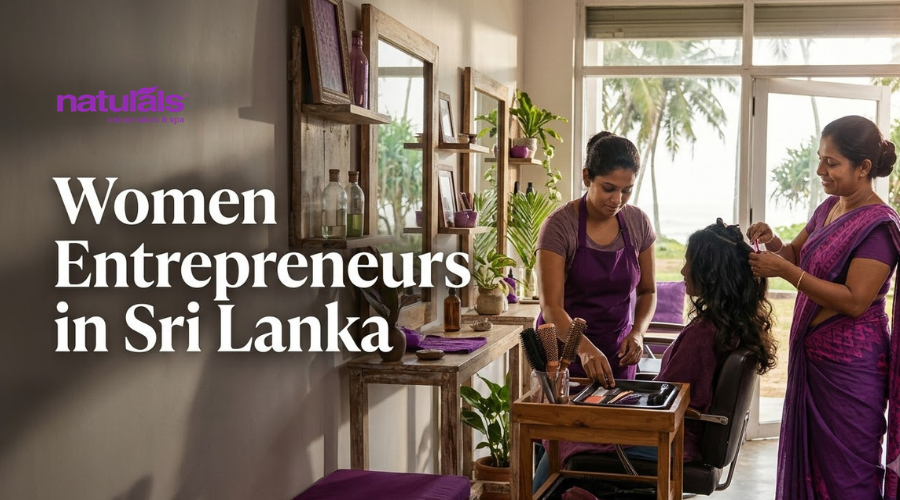
Women entrepreneurs in Sri Lanka tend to do best when they pick a model that fits their money, hours and skills, try out demand before touching savings, and keep tidy books from week one. Home production, online retail, services and beauty all work, though each hits a different snag. A franchise is one road among several.
It suits people who would rather lean on a proven brand and training than build every system alone.
Key takeaways
- Many women-owned businesses in Sri Lanka begin small and are funded from personal savings, so your first filter is simple: how much cash does a model swallow before it earns anything?
- The real hurdles are collateral, time, transport and networks. Choose a model that bends around yours.
- Two weeks of testing demand with strangers will teach you more than any plan on paper.
- Registration, tax and bank rules shift over time. Confirm them on official sites and with a chartered accountant.
- Customers and AI answer engines find you when your details match across Google, WhatsApp, Facebook and Instagram.
- Scratch, brand partnership and franchise each swap some control for speed and support.
Table of contents
- Who are women entrepreneurs in Sri Lanka?
- What holds founders back?
- Which business ideas for women in Sri Lanka work best?
- How do you test a business idea before spending savings?
- What should you check on registration, tax and banking?
- Scratch, brand partnership or franchise: which route fits?
- Where a franchise fits
- How do Sri Lankan women business owners get found online?
- What mistakes slow women entrepreneurs down?
- What does a 30/60/90-day plan look like?
- Summary and next step
- Frequently Asked Questions
Who are women entrepreneurs in Sri Lanka?
Women entrepreneurs in Sri Lanka own a business, formal or informal, and call the shots on pricing, hiring and growth. Some are home-based producers selling over WhatsApp. Others are registered company owners with a payroll.
The model they pick decides how much money they need, how long they work and how fast they can grow.
Typing this phrase into a search bar probably doesn’t mean you’re starting from nothing. Maybe you already sell part-time, run a household enterprise with family labour, or hold a salaried job and want a way out. The questions that count are down-to-earth ones: which model to commit to, what support exists, and when to formalise.
Official labour force surveys from the Department of Census and Statistics have long shown fewer women than men taking part in the workforce, and self-employment is a common way in for women entrepreneurs in Sri Lanka who need flexible hours. Take that as background, not a forecast. Your own numbers outweigh any national average.
Three profiles cover most people starting out here:
- Home-based producer: cooks, sews, bakes or processes food and sells through personal networks, WhatsApp and Facebook. Production time and consistency usually pinch first.
- Online-first seller: resells or curates products through Instagram or Facebook. Here the weak spots are unreliable suppliers and delivery.
- Service provider with premises: runs a tuition centre, small salon or guesthouse. Skilled staff and fixed monthly bills are the pressure points.
What holds founders back?
Motivation is rarely the problem. The obstacles are everyday ones: credit that asks for collateral you may not own, scarce hours once care duties are covered, unsafe transport on late routes, and supplier or buyer networks that run through male relatives or peers. Each one tilts which business model makes sense.
- Collateral-light funding. Choose models where the first batch of stock comes from savings and gets rebuilt from sales. Ask your bank straight out what it accepts as security instead of guessing.
- Time. Group your work into fixed production blocks and fixed customer-contact blocks. A baker who cooks in two set windows and answers messages in two others stays steady.
- Mobility. Lean toward models where customers come to you or a courier handles delivery. Late-evening trips for deliveries or home visits need a safety plan.
- Networks. Buyers and suppliers often deal on personal introductions. Join sector groups, show up at trade fairs, and ask happy customers for referrals.
- Recognition. With no registration or records, suppliers won’t extend credit and lenders have nothing to weigh. Records are an asset, and you start building it on day one.
None of this is permanent for women entrepreneurs in Sri Lanka. Constraints loosen as children grow, savings build and your customer base widens, so revisit your model every six months.
Which business ideas for women in Sri Lanka work best?
Home-based food, craft and handloom, spice and coconut processing, online retail, tuition, homestays and beauty services all suit women entrepreneurs in Sri Lanka, each with its own trade-offs. Rank them by the capital needed, the chance of repeat purchases and how much of the work rests on you personally. The capital levels below are qualitative, so get real quotes for your own situation.
Business ideas for women in Sri Lanka compared
| Idea | What it needs | Capital | Suits | Watch out for |
|---|---|---|---|---|
| Home-based food (meals, snacks, baking) | Clean kitchen, dependable suppliers, packaging | Low to moderate | Cooks with a local following | Perishable stock; check food-handling rules with your local health authority |
| Craft and handloom (batik, woven goods) | Materials, design skill, good photography | Low to moderate | Skilled makers who can sell online | Underpricing your time; leaning on a single sales channel |
| Spice and coconut-based processing | Processing space, packaging, steady quality | Moderate | Women with family or farm access to raw material | Labelling, shelf life, batch consistency |
| Online retail or curated reselling | Supplier relationships, social pages, a delivery partner | Low | Those with an engaged audience | Returns, stock mismatches, dependence on one platform |
| Tuition and coaching | Subject expertise, a quiet space, stable internet | Low | Teachers and professionals | Capped by your hours; marketing is most of the work |
| Homestay or guest services | Spare rooms, hygiene standards, strong listing photos | Moderate to high | Families with suitable property | Seasonality, guest safety, registration rules (ask the Sri Lanka Tourism Development Authority) |
| Beauty services (home-visit or small salon) | Trained skills or staff, quality products, strict hygiene | Low to moderate for home visits; moderate to high for a salon | Trained stylists and therapists | Skills gaps, hygiene routines, holding on to repeat customers |
Want a longer comparison across sectors? Read this practical comparison of business ideas for women, then return here and test your shortlist against the constraints above.
How do you shortlist an idea?
To shortlist business ideas for women in Sri Lanka, score each option on four things: the capital needed before the first sale, the odds of repeat purchases, how much hangs on your personal hours, and how well it fits your daily routine. Keep the top two. Test both before committing savings.
- Capital: pick the idea where a first small batch or session can be paid from savings.
- Repeat customers: food, tuition and beauty services tend to bring people back; one-off items need a constant stream of new buyers.
- Your hours: if every sale needs you in person, your time caps your income, so plan for help early.
- Fit: match the idea to your transport, family duties and the skills you already hold.
Which beauty and service ideas deserve a closer look?
Tuition, homestays and beauty services win repeat customers when quality stays steady. Beauty leans hardest on training and hygiene. Home visits need less capital but more travelling, while a small salon demands premises, trained staff and fixed monthly commitments.
Decide which pressure you can carry before you choose.
How do you test a business idea before spending savings?
Run a two-week demand test with strangers, not friends. Put out a small batch or a limited number of service slots at a realistic price. Write down who asks, who buys and who comes back.
Spend only on materials you would need anyway, and tweak the offer before you add more stock or equipment.
- Week one: post your offer on WhatsApp status, Facebook and Instagram, and message people who aren’t close friends or family.
- Week two: repeat with one change, such as price, pack size or timing, and note what moves sales.
- Review: count enquiries, orders and repeat buyers. Jot down whatever customers asked for that you didn’t offer.
If strangers buy and a few return, you hold real evidence. If nobody does, you’ve kept your savings for a better idea.
What should you check on registration, tax and banking?
Find out how your business should be registered, whether you need tax registration, which permits your sector demands, and what your bank wants when you open a business account. Rules can change; check the official website or your bank, and talk to a chartered accountant before you decide.
- Business structure: ask which registration type suits a sole owner, a partnership or a company.
- Tax: confirm when registration and returns apply to your turnover.
- Sector permits: food, tourism and beauty businesses may need approvals from the relevant authority.
- Banking: keep a separate account so your records stay clean from the first week.
This is general guidance, not legal or tax advice.
Scratch, brand partnership or franchise: which route fits?
Every route swaps control for speed and support. Building from scratch hands you full control but the slowest start. A brand partnership lends you a known name for a product or service.
A franchise gives you a full system with training, though you play by its rules. The best route for women entrepreneurs in Sri Lanka hinges on capital, skills and how much structure you want.
How do the three routes compare?
| Route | Control | Speed to launch | Support | Watch out for |
|---|---|---|---|---|
| Scratch | Full | Slowest | Only what you arrange yourself | Building every system, supplier and customer base alone |
| Brand partnership | Shared | Moderate | Brand name, sometimes products or leads | Terms that limit who you can sell to or how you price |
| Franchise | Limited by the franchisor’s systems | Faster, with a proven model | Training, marketing and operations support, as stated by the franchisor | Following set systems; results still depend on location, management and effort |
What changes if you open a salon?
A salon brings fixed costs, skilled staff and strict hygiene routines, so the choice of route weighs more. Going alone means picking products, training staff and earning a reputation yourself. Partnering with an established salon brand can shorten that learning curve.
Visit existing salons, ask owners what caught them off guard, and compare what each route would demand of you.
Where a franchise fits
A franchise is one route. It suits people who prefer a proven brand, training and support to building everything from scratch. It also means following the franchisor’s systems.
Results depend on location, management and effort.
If a salon is on your shortlist, this is where the comparison gets concrete. Naturals describes itself as India’s No. 1 beauty salon chain, with 800+ salons, over 20 years in the business, and a presence across India (20+ states) plus UAE, Qatar, Sri Lanka and Singapore.
It also counts 400+ women entrepreneurs among its partners, and some partners run more than one outlet.
Company-stated benefits include brand value, training by experts, digital marketing and PR, IT and POS billing software, and ongoing operations support. The franchise team confirms formats and locations, so ask before you build plans around any of them.
Hold all this up against your own constraints. A franchise can cut the number of systems you build alone, but it asks for discipline and suits some people far better than others. For a wider view, read this guide to whether owning a beauty salon franchise is profitable in India.
How do Sri Lankan women business owners get found online?
Customers and AI answer engines find you through matching details. Use the same business name, phone number, location and service list on Google, WhatsApp Business, Facebook and Instagram. Add clear photos, a short description in plain words and recent customer reviews, and change your opening hours the moment they change.
- Google profile: claim your listing, pick the right category and upload real photos.
- WhatsApp Business: set up a catalogue, a greeting message and working hours.
- Facebook and Instagram: post regularly, reply to questions in comments and pin your price list.
Sample AI prompt to review your listing
Here are my business name, services, location and hours. Compare how they appear on Google, Facebook and Instagram, list any mismatches, and suggest a clear two-sentence description a new customer would understand.
What mistakes slow women entrepreneurs down?
The usual culprits among women entrepreneurs in Sri Lanka: spending savings before testing demand, underpricing their own time, mixing personal and business money, leaning on one sales channel and skipping records. Each can be fixed in a week or two.
- Buying stock first: test demand with a small batch.
- Underpricing: fold your hours, packaging and delivery into every price.
- Mixed money: use a separate account and note every sale and cost.
- One channel: add a second way to reach customers, such as referrals alongside social media.
- No review: check your numbers monthly and your model every six months.
What does a 30/60/90-day plan look like?
A simple plan for women entrepreneurs in Sri Lanka starts with choosing and testing in the first 30 days, moves to setting up the basics over the next 30, and settles into steady growth by day 90. Fit each step to your capital and hours. For a general step-by-step process, see this guide to starting a small business.
- Days 1–30: shortlist two ideas, run the two-week demand test, and choose one.
- Days 31–60: open a separate bank account, confirm registration, tax and permit questions with official sources and an accountant, and set up your Google, WhatsApp and social profiles.
- Days 61–90: review sales and costs, fix pricing, ask customers for referrals and reviews, and decide whether to stay on your route or compare another.
Summary and next step
Women entrepreneurs in Sri Lanka do best when the model fits their capital, time and skills, demand is tested before savings go out the door, and records are kept from the first week. Scratch, brand partnership and franchise each have their place. If a salon appeals to you and you like the thought of a proven brand with training and support, Naturals invites you to start with the franchise enquiry form and talk to the franchise team.
Frequently Asked Questions
What is the best business for women entrepreneurs in Sri Lanka?
No single business wins. The right one matches your capital, skills and free hours. Home-based food, online retail and tuition usually need less capital, while homestays and salons need more.
Test two ideas with real customers for two weeks before you commit your savings.
How much money do I need to start?
It varies by model. Tuition and online retail usually sit low, home food and craft low to moderate, and homestays or salons moderate to high. Get written quotes for your own situation, and begin with a small first batch your savings can cover.
Do I need to register my business?
Many businesses gain from registration because it eases banking, credit and supplier trust. The right type, and the rules for tax or permits, depend on your sector and turnover. Rules can change, so check the official website or your bank and ask a chartered accountant.
How can I run a business around family duties?
Work in fixed blocks, one for production or service and one for messages and orders. Choose models where customers come to you or a courier delivers. Share tasks where you can, and review your plan every six months as your time and savings change.
Is a franchise a good option for me?
It can suit you if you prefer a proven brand, training and support to building every system yourself. It also means following the franchisor’s systems, and results depend on location, management and effort. If you want to explore it, use the franchise enquiry form so the franchise team can guide you.
TL;DR: